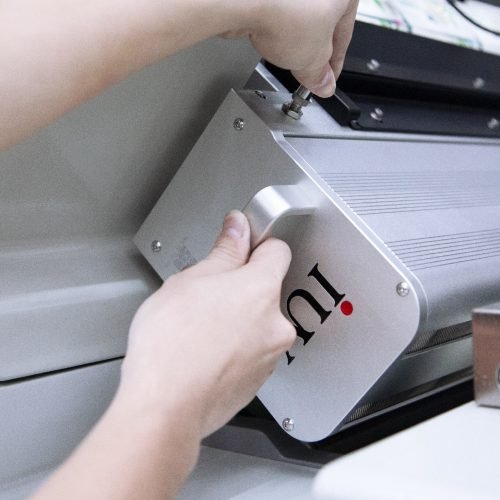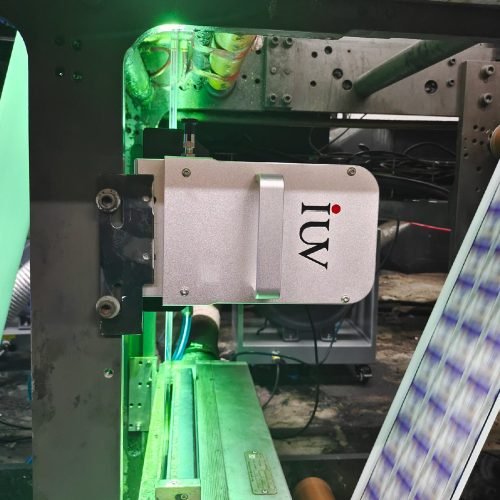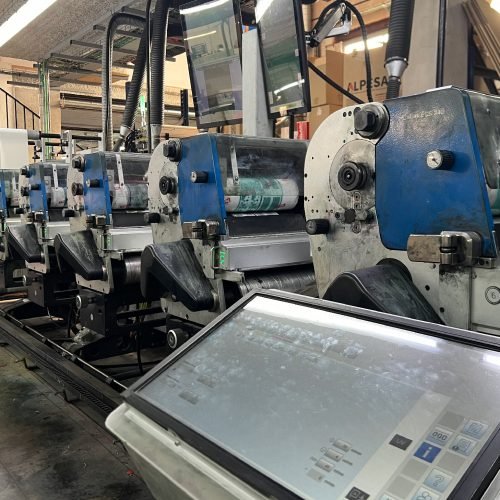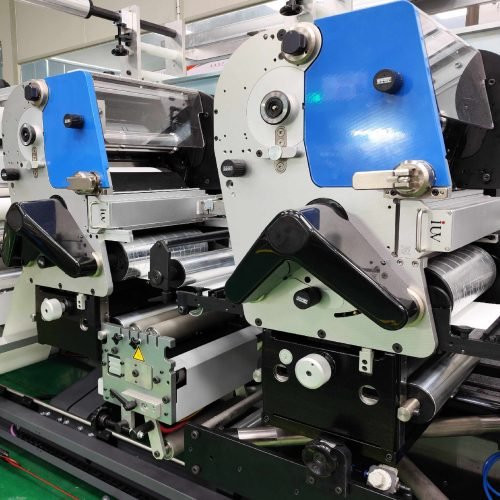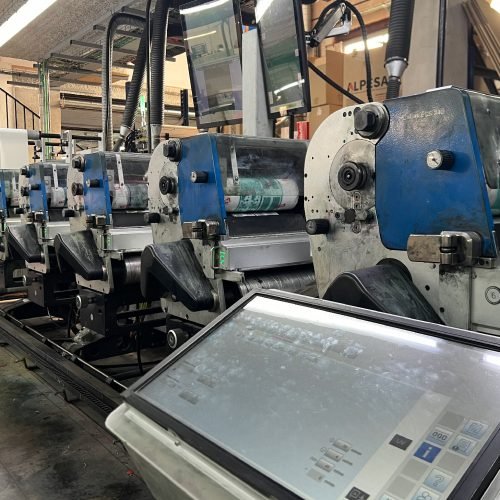
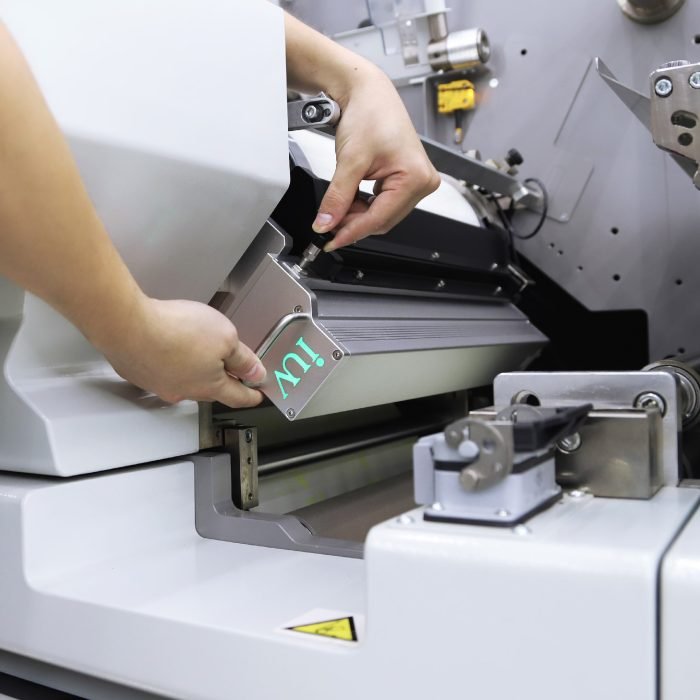
Narrow web printing has always been about precision and adaptability, but the game changed when UV curing systems entered the scene. Imagine printing intricate wine labels where metallic inks sit beside delicate gradients, or pharmaceutical packaging requiring instant drying for immediate die-cutting. That’s where UV curing transforms possibilities into realities. Unlike traditional drying methods that rely on evaporation, UV technology uses targeted light energy to create cross-linked polymers in milliseconds. The result? Ink that doesn’t just dry – it cures into a durable, scratch-resistant finish.
Flexographic printers working with pressure-sensitive labels know the pain of solvent retention in conventional inks. With UV curing, that residual softness becomes a non-issue. The instant cure locks pigments in place, eliminating dot gain and maintaining color consistency across long runs. For offset printers handling premium cosmetic packaging, UV systems allow layering of thick varnishes without blocking or set-off issues. The chemistry is straightforward: photoinitiators in UV inks absorb specific wavelengths (typically 365-395nm for LED systems), triggering polymerization before the substrate even leaves the print station.
What makes LED-UV particularly revolutionary is its cold cure capability. Traditional mercury-vapor lamps generate significant heat, forcing printers to use heat-resistant substrates or compromise on speed. LED systems operate at near-ambient temperatures, making them ideal for thin films and heat-sensitive materials like PE or PVC. A label converter running shrink sleeves can now print on unsupported PVC without worrying about material distortion. Energy consumption drops by up to 70% compared to arc lamps, and with no ozone emissions, ventilation requirements simplify.
In hybrid printing setups, UV curing enables wet-on-wet printing that would clog conventional dies. A flexo station applying white ink can be followed immediately by a digital UV inkjet unit printing variable data – all cured in-line without intermediate drying tunnels. This hybrid approach is redefining short-run packaging, allowing converters to handle metallic effects, tactile varnishes, and sequential numbering in a single pass.
The environmental angle shouldn’t be overlooked. UV formulations contain negligible VOCs, aligning with tightening global regulations. Waste reduction is another hidden benefit: instant curing means no more washed-up plates from ink drying in the anilox cells. For food packaging jobs, UV LED’s mercury-free technology meets stringent FDA compliance standards while enabling high-opacity whites for barcode legibility.
Adhesion remains a common concern, but modern UV chemistries have cracked the code. Primerless adhesion on polyolefins is now achievable through advanced oligomer blends. For challenging substrates like untreated PP, low-energy LED lamps (395-405nm) paired with cationic curing systems provide superior bonding without pre-treatment.
Speed gains are quantifiable. A tag-and-label press running water-based inks might top out at 150 fpm to avoid web breaks. Switch to UV, and 400 fpm becomes sustainable thanks to the absence of water swelling in paper stocks. On filmic materials, the difference is even more pronounced – no waiting for solvents to off-gas means immediate conversion into finished rolls.
The future lies in tunable UV systems. Imagine adjusting spectral output on-the-fly to optimize curing for different ink types within a job. Some LED arrays already offer this, emitting specific wavelengths to handle hybrid ink sets containing both free-radical and cationic components. For converters juggling diverse jobs – from medical device labels requiring biocompatible inks to automotive decals demanding chemical resistance – this flexibility reduces changeover time and material waste.
Maintenance routines shift dramatically with UV adoption. No more cleaning dried ink from anilox rolls between shifts. No more humidity controls to manage drying rates. The trade-off? Regular inspection of UV lamp arrays and reflector surfaces to maintain peak irradiance. But with LED lifetimes exceeding 20,000 hours, downtime becomes negligible compared to the constant babysitting required by solvent-based systems.
For those hesitant about the transition, start with a single UV-equipped flexo station for spot colors or coatings. The immediate productivity jump often justifies expanding UV capabilities across the entire press. As substrates grow thinner and SKUs multiply, the ability to cure inks on-demand – not when heat tunnels allow – becomes the ultimate competitive edge in narrow web printing.