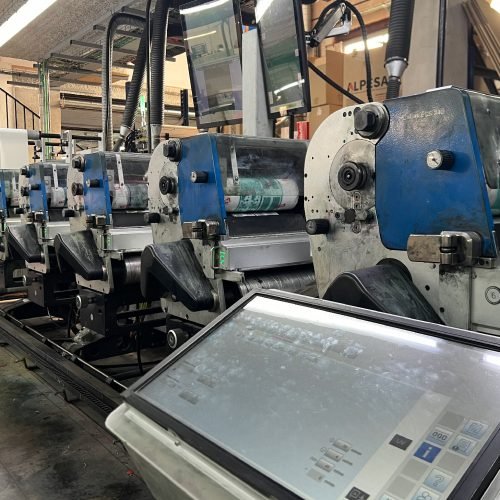
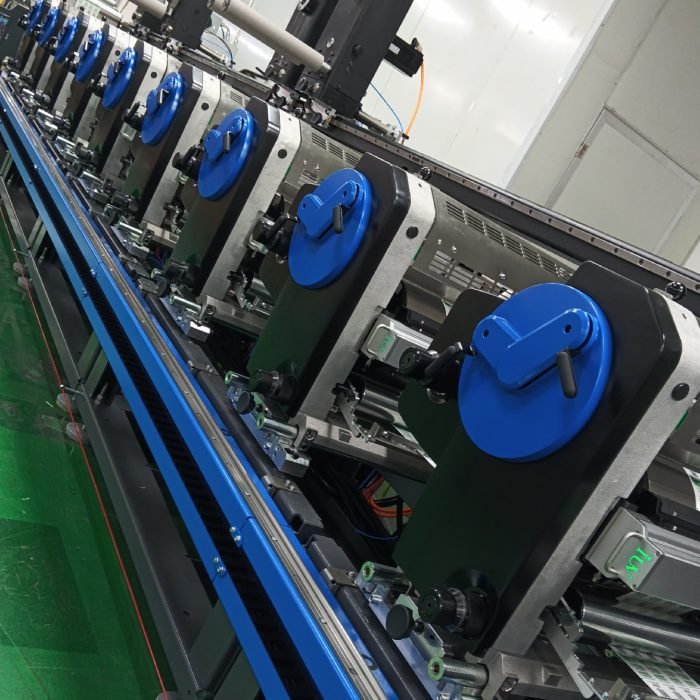
Flexographic printing dominates the label industry for reasons rooted in both engineering precision and material science. Unlike offset printing’s flat plates or digital printing’s toner limitations, flexo uses photopolymer plates that conform to uneven surfaces – a game-changer for pressure-sensitive labels on textured substrates. The process achieves consistent ink transfer at speeds exceeding 750 feet per minute, with modern gearless presses maintaining registration accuracy within ±0.0015 inches.
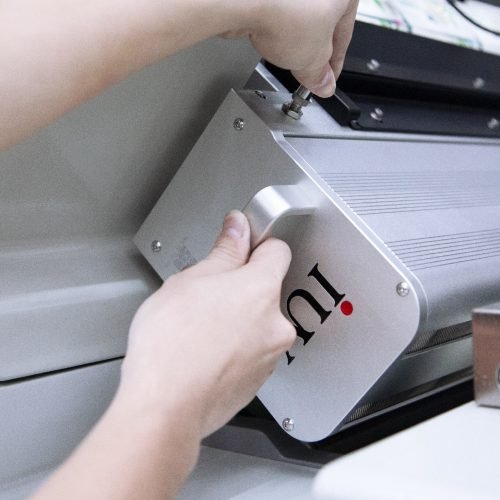
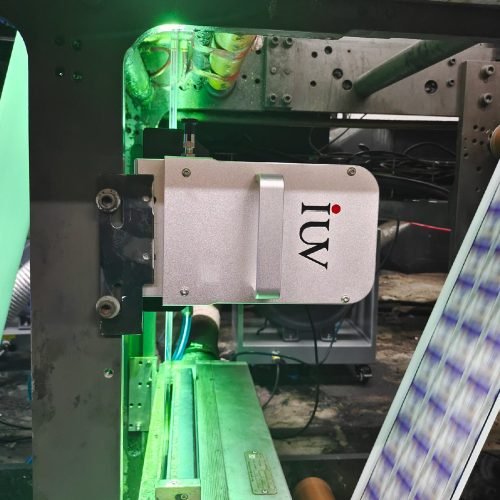
LED UV curing transformed flexo’s capabilities. Traditional mercury-vapor UV systems operated at 300-600nm wavelengths, but LED arrays now target specific photoinitiator responses at 365-395nm. This spectral precision reduces heat generation by 70% compared to conventional UV, preventing film distortion during curing. Energy consumption drops to 25% of previous levels while achieving full cure in 0.3 seconds – critical for heat-sensitive materials like thin-gauge PE films.
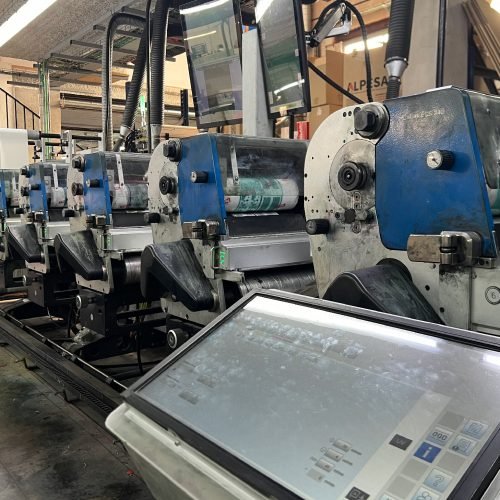
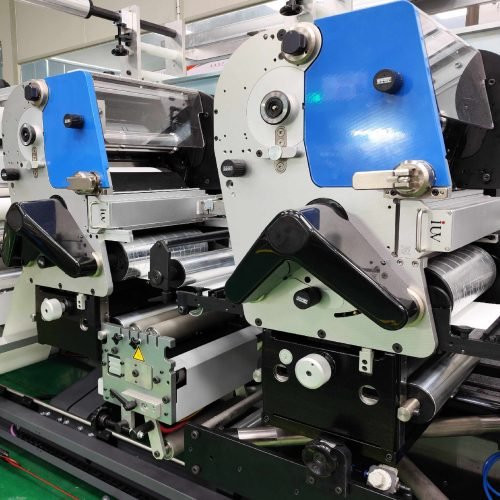
Narrow web flexo presses (typically 13″-25″ web widths) leverage these advancements for label production. Servo-driven tension control maintains web stability at 450 fpm, while chambered doctor blades manage ink viscosity fluctuations down to 28 seconds #4 Zahn Cup. The combination allows printing 150 lpi screens alongside solid colors on the same press pass – something rotary screen or letterpress struggles to achieve cost-effectively.
Substrate versatility explains flexo’s market dominance. From BOPP films requiring 2.5 N/cm ink adhesion to textured wine labels needing 8-micron anilox cells, the technology adapts. UV inks now achieve 98% color gamut coverage on metallized substrates without primer layers. Food-safe formulations meet FDA 21 CFR 175.300 standards while maintaining 4H pencil hardness after curing.
Cost efficiency emerges from reduced waste. Plate imaging advancements cut setup times to 18 minutes for 8-color jobs. Automated registration systems compensate for substrate stretch during production, maintaining color consistency across 50,000-label runs. Compared to sheetfed offset, flexo reduces ink consumption by 40% through precise anilox volume control (1.8-9.0 BCM/in²).
Environmental factors play a role. Water-based flexo inks achieve 0.3 lbs/VOC gallon versus 4.5 lbs for solvent-based alternatives. LED UV systems eliminate ozone generation entirely, complying with ISO 14001 standards without exhaust systems. Plate processors now recycle 95% of washout solvents, reducing hazardous waste.
The technology’s adaptability shows in security label production. Microtext printed with 2000 dpi laser-engraved plates combines with UV fluorescent inks detectable at 254nm. Cold foil stamping integrates seamlessly between print units, achieving 0.1mm registration for holographic effects.
Print durability meets harsh environment demands. UV-cured flexo inks withstand 72-hour salt spray tests (ASTM B117) and 5000 Taber cycles (ASTM D4060). In-mold labels survive 300°F injection molding temperatures without yellowing.
Operational economics favor flexo for runs from 10,000 to 1 million labels. Digital presses can’t match the $0.0008 per color impression cost of modern flexo systems. Even variable data jobs now integrate with flexo through hybrid digital print units, merging the benefits of both technologies.
As brands demand shorter runs and faster turnarounds, flexo evolves. New plate materials achieve 1-98% dot reproduction at 250 lpi. Presses automatically adjust ink viscosity in real-time using ultrasonic sensors. The future points to even tighter integration between flexo’s mechanical reliability and smart manufacturing protocols.
For converters and brand owners alike, the equation remains clear. No other process combines flexo’s substrate flexibility, print quality, and operational efficiency at scale. From pharmaceutical leaflets requiring 0.1mm bleed control to automotive labels surviving engine compartment heat, the technology delivers where others compromise. The numbers tell the story – 68% of all pressure-sensitive labels worldwide now originate from flexo presses, a percentage that keeps growing as the technology outpaces alternatives.