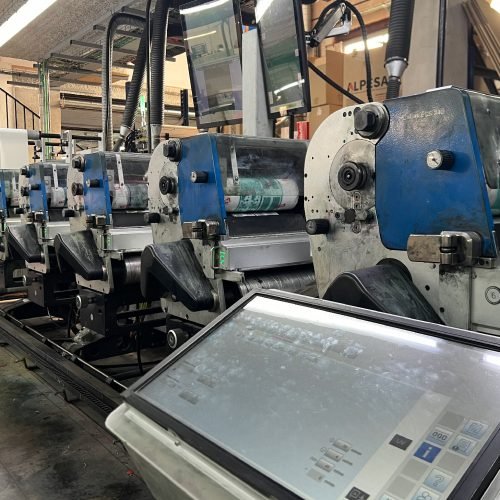
Sure, I can definitely help you craft that SEO content! Here’s a draft focusing on how LED technology elevates precision in narrow web flexo printing, incorporating your keywords and aiming for readability.
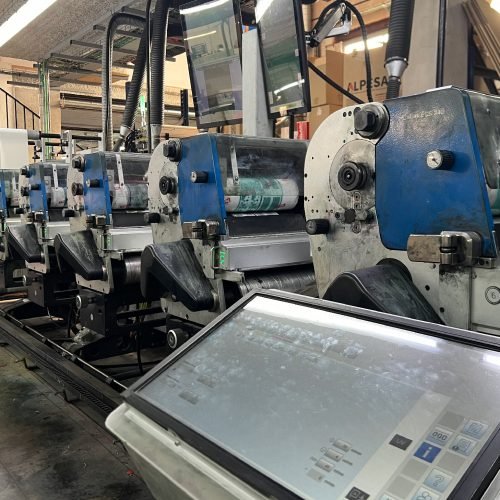
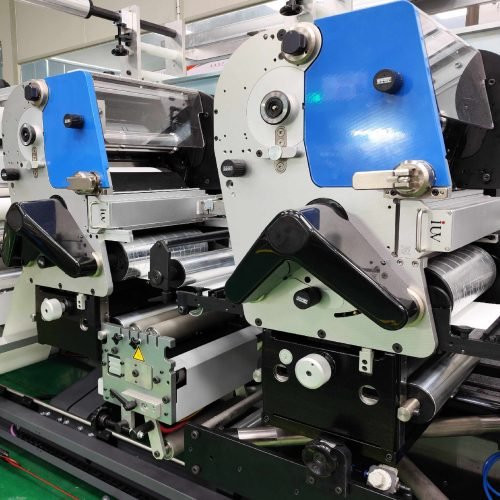
LED technology is revolutionizing narrow web flexo printing. This advancement brings unparalleled precision to label production. Flexographic printing, or flexo, is a versatile method. It uses flexible relief plates. These plates transfer ink to the substrate. Narrow web flexo specifically targets narrower rolls of material. This is common for labels and flexible packaging.
The integration of LED UV curing systems marks a significant leap forward. Traditional UV curing relied on mercury lamps. These lamps generate a lot of heat. They also have a shorter lifespan. They emit a broad spectrum of UV light. This can degrade certain inks and substrates. LED UV systems offer a more controlled and efficient solution.
Precision in printing is paramount for label quality. It ensures sharp details. It guarantees accurate color reproduction. It provides consistent registration between colors. Narrow web flexo is often chosen for its speed and cost-effectiveness. However, achieving high precision can be challenging. This is where LED technology truly shines.
One of the key benefits of LED UV curing is its precise wavelength output. LEDs emit a narrow band of UV light. This light is specifically tuned to the photoinitiators in UV-curable inks. This targeted emission means less wasted energy. It also means more efficient and complete ink curing. Efficient curing leads to better ink adhesion. It results in superior print durability and resistance to chemicals and abrasion.
The heat generated by LED UV lamps is significantly lower than mercury lamps. This is a game-changer for narrow web printing. Many label substrates are heat-sensitive. Think of films, foils, and thin papers. Lower heat input prevents substrate distortion or shrinkage. This maintains dimensional stability. Stable substrates are crucial for precise registration. It ensures that each color layer aligns perfectly with the others. This eliminates ghosting and misregistration issues.
Furthermore, LED lamps have a very long operational life. They can last tens of thousands of hours. They also offer instant on/off capability. This is unlike mercury lamps that require warm-up and cool-down periods. The instant nature of LEDs means less downtime. It allows for quicker job changes. It also contributes to energy savings. The precise control over intensity and exposure time further enhances repeatability. This consistency is vital for maintaining high print quality across long production runs.
The narrow wavelength output of LEDs also allows for more precise control over ink properties during the curing process. This can lead to improved ink film formation. It can enhance gloss levels. It can reduce dot gain, which is the tendency for printed dots to spread and enlarge. Reduced dot gain means sharper halftone dots and finer details. This is especially important for fine text and intricate graphics commonly found on labels.
In comparison to offset printing, flexo printing has historically faced challenges with fine detail reproduction. However, with advancements like LED UV curing, flexo is closing the gap. Offset printing uses a flat image carrier. It typically uses an intermediate blanket. This process is excellent for smooth, solid coverage and fine detail. But it can be less forgiving with ink viscosity and transfer.
Flexo, on the other hand, relies on raised image carriers. This can make ink transfer highly efficient. However, achieving the crispness of offset could be difficult. LED UV curing empowers flexo by enabling the use of inks formulated for specific UV outputs. These inks cure faster and with greater integrity. This means that even very fine lines and small text can be rendered with exceptional clarity.
The ability of LED UV systems to deliver high energy output at specific wavelengths is a key enabler. It allows printers to use a wider range of ink formulations. This includes water-based UV inks and conventional UV inks. Each type has its advantages. Water-based UV inks offer environmental benefits. Conventional UV inks provide extreme durability. The LED system can be optimized for the specific ink chemistry being used. This versatility expands the capabilities of narrow web flexo.
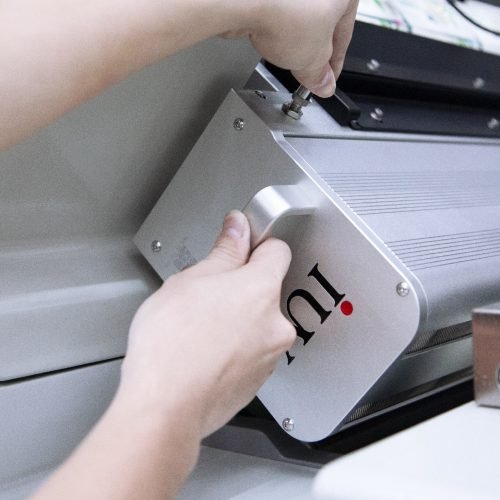
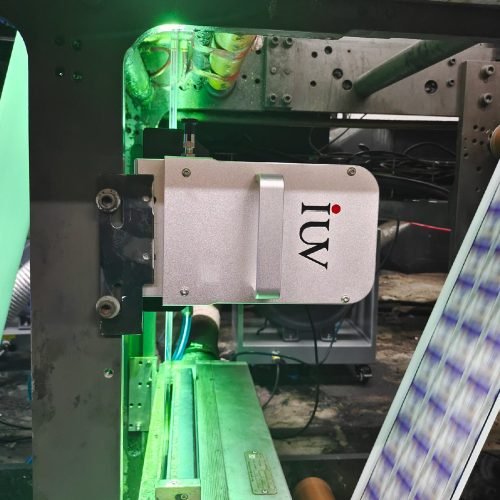
Moreover, the compact nature of LED UV curing units is beneficial for narrow web presses. These presses often have limited space. The modular design of LED systems allows for easy integration. They can be retrofitted onto existing presses. They can also be incorporated into new press designs. This flexibility makes the transition to LED technology more accessible.
The precision gained through LED UV curing directly impacts brand owners and end-users. It ensures that product labels are visually appealing. They convey the brand’s message effectively. Accurate color matching is crucial for brand recognition. Sharp, legible text is essential for product information and compliance. LED technology helps achieve these goals consistently.
The environmental benefits of LED UV curing are also noteworthy. As mentioned, they are more energy-efficient than traditional mercury lamps. They also do not contain mercury, which is a hazardous substance. This simplifies disposal and reduces environmental impact. The faster curing times can also lead to increased press speeds. This means higher productivity and potentially reduced energy consumption per label.
In conclusion, the advent of LED UV technology in narrow web flexo printing is a significant advancement. It addresses critical needs for precision, efficiency, and versatility. The controlled wavelength output, low heat generation, and long lifespan of LEDs contribute to superior print quality. They enable sharper details, better registration, and enhanced durability. This makes narrow web flexo an even more compelling choice for high-quality label production. It empowers printers to meet the demanding standards of today’s market. The technology ensures that every label printed is a testament to precision and innovation.