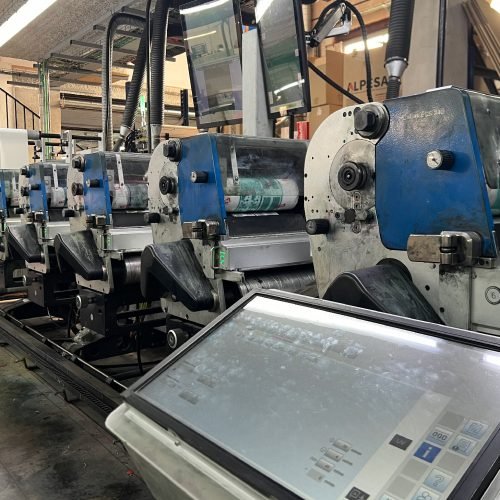
The label printing industry has undergone seismic shifts in recent years, driven by advancements that blend mechanical precision with chemical innovation. At the heart of this transformation lies narrow web technology – a system that’s redefining speed, quality, and sustainability in ways traditional methods never imagined.
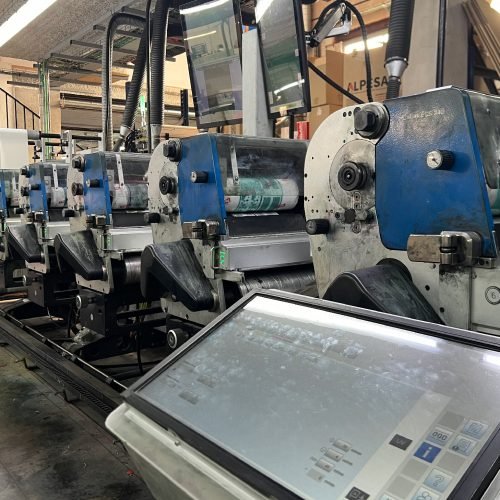
Flexographic printing’s marriage with narrow web platforms creates a powerhouse for short-to-medium runs. Unlike older rotary systems, modern servo-driven presses maintain registration accuracy below ±0.1mm even at 200m/min. The secret? Tension control systems that adjust in real-time using laser measurement, compensating for substrate stretch during high-speed operation. This precision enables flawless reproduction of microtext (as small as 4pt) and gradient transitions that previously required offset quality.
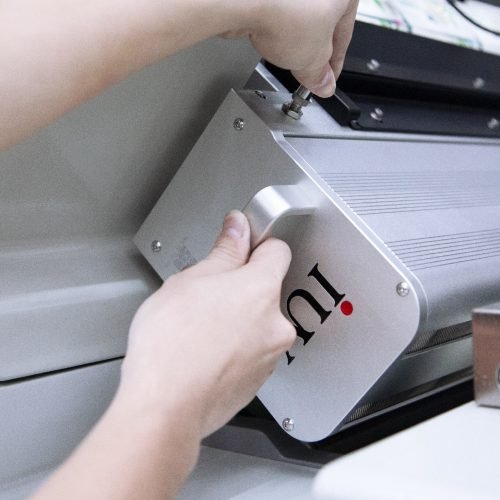
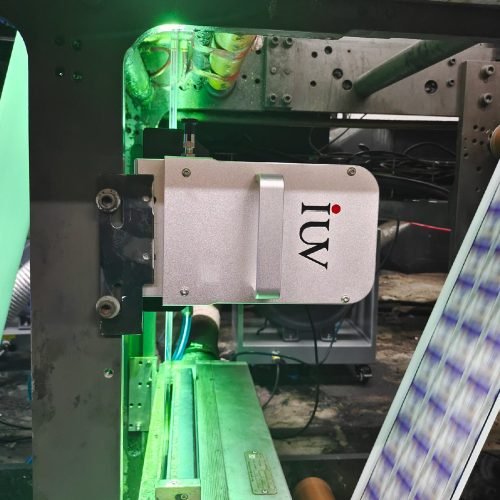
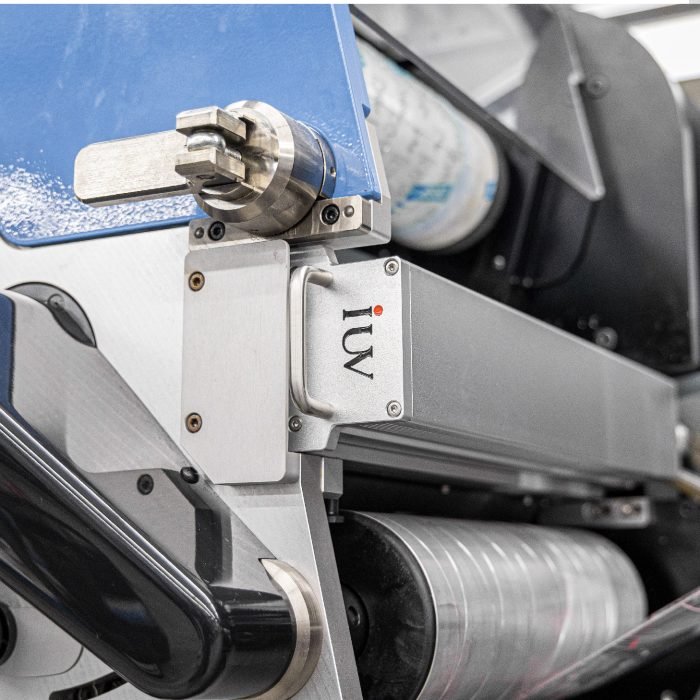
Offset printing hasn’t disappeared – it’s evolved. Hybrid narrow web presses now integrate offset units for metallic inks and complex varnishes. The game-changer comes from using LED-UV curing stations between print stations. Unlike conventional mercury lamps, these solid-state units achieve full ink polymerization in 0.3 seconds at 405nm wavelength. The result? No dot gain from ink absorption, sharper edges, and the ability to print on heat-sensitive materials like thin films without distortion.
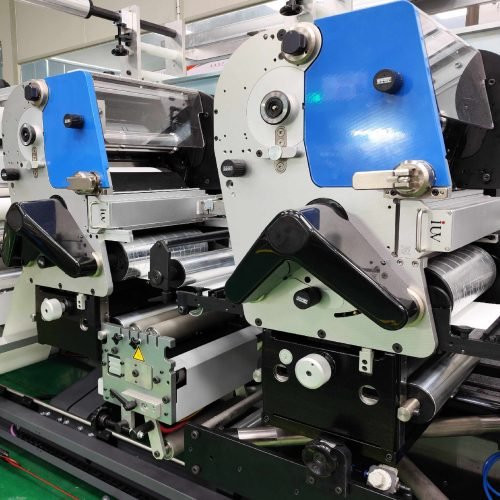
Speaking of materials – narrow web’s versatility shines here. From textured paper stocks to BOPP films with 0.8% shrinkage rates, modern presses handle substrates that would jam older machines. The key lies in modular design: quick-change print cylinders, adjustable web paths, and temperature-controlled rollers that maintain material stability. For security labels requiring multiple substrates in one job, this flexibility becomes critical.
LED-UV curing deserves its own spotlight. Traditional UV systems wasted 60% of energy as heat. LED arrays cut power consumption by 70% while delivering 8,000-20,000 hours of maintenance-free operation. The instant on/off capability eliminates warm-up delays – crucial for just-in-time production. But the real magic happens chemically: UV inks now achieve 98% cure through depth, creating surfaces that withstand industrial abrasion tests (ASTM D5264) without lamination.
Sustainability metrics tell a compelling story. Narrow web systems reduce waste substrate by 40% compared to wide-web alternatives. Water-based flexo inks have advanced to match solvent-based performance – 95% VOC reduction without sacrificing color gamut. Even the cleaning process evolved: closed-loop solvent recovery systems in modern presses reclaim 85% of wash solutions for reuse.
The digital revolution plays a supporting role. Hybrid presses integrate inkjet units for variable data – serial numbers, QR codes – printed at line speeds. But unlike full digital presses, they avoid the trade-off between quality and speed. A typical configuration might run flexo for base colors at 75m/min, then add digital variable elements without slowing production.
Registration challenges? Solved. Camera systems now track print patterns at 10,000fps, making micro-adjustments between cylinders. The latest gearless presses achieve this through individual servo motors on each print station, eliminating mechanical backlash. For embossing or hot foil stamping modules, pressure control happens dynamically via hydraulic sensors – crucial when switching between delicate papers and rigid plastics.
Inks continue pushing boundaries. Low-migration UV inks meet food packaging standards (EU 10/2011) without secondary coatings. Conductive inks printed via narrow web enable smart labels with embedded sensors – temperature, humidity, even NFC tags. The precision of modern anilox rollers (up to 1,200 LPI) allows these functional inks to perform reliably at production scales.
Finishing options expanded dramatically. Rotary die-cutting units achieve tolerances of ±0.15mm while running at full press speed. Semi-rotary modules handle irregular shapes without stopping the web. For labels requiring tamper evidence, on-press varnish units apply fracture coatings that crack visibly if removed.
The economic argument seals the deal. Changeover times plummeted from hours to minutes through automated preset systems. A job with six colors, varnish, and die-cutting now transitions in under 15 minutes. Combined with reduced waste, this makes short runs profitable – a market segment growing 12% annually as brands pursue limited editions and regional variants.
What’s next? Integration with Industry 4.0. Presses now output real-time data on ink consumption, energy use, and maintenance needs. Predictive algorithms schedule component replacements before failures occur. For converters, this means 95% uptime – crucial in an era where lead times compress daily.
From craft breweries needing small batches of metallic labels to pharmaceutical companies requiring anti-counterfeit features, narrow web technology delivers solutions that balance quality, speed, and adaptability. It’s not just a printing method – it’s a manufacturing philosophy reshaping how products present themselves to the world.
Support Pollinations.AI:
🌸 广告 🌸 以窄幅印刷与LED-UV固化打造极致标签品质,了解更多让您的印刷领先一步。