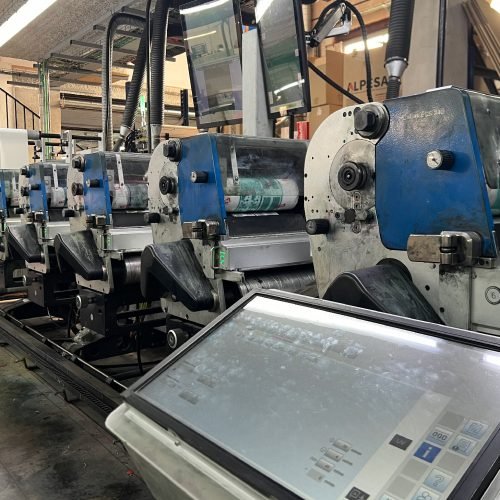
Food and beverage packaging labels face unique challenges – they must withstand condensation in refrigerators, resist chemical interactions with product contents, and maintain color vibrancy under retail lighting. The choice between flexographic, offset, and narrow web printing technologies directly impacts a brand’s ability to meet these demands while maintaining production efficiency.
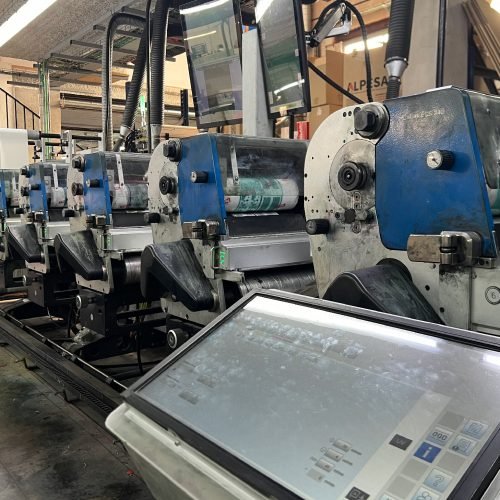
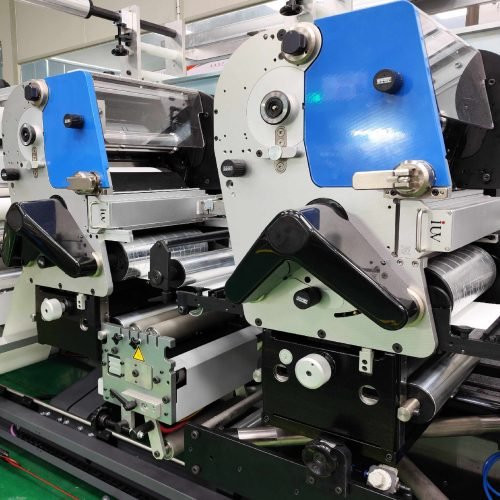
Flexographic printing dominates high-volume runs for beverage shrink sleeves and pressure-sensitive labels. Modern photopolymer plates achieve 150-200 lpi resolution, suitable for most food packaging graphics. The real game-changer lies in hybrid presses combining flexo stations with digital enhancement units – particularly effective for variable data like batch numbers or promotional codes. A common pitfall involves insufficient attention to anilox roll specifications; using 600-800 LPI ceramic rolls with 3.0-4.0 BCM ink volume typically optimizes opacity on metallic substrates.
Offset printing remains preferred for premium wine labels and craft beverage packaging requiring photographic detail. The key advantage emerges in gradient reproduction – a 1-99% tonal range can be achieved compared to flexo’s 5-95% limitation. However, UV-resistant offset inks require precise formulation balancing. A recent innovation uses low-migration LED UV inks that cure at 395nm wavelength, reducing odor contamination risks for sensitive products like dairy packaging.
Narrow web presses (8-13″ web width) have evolved beyond simple tags to handle complex food labels with embossing, hot foil stamping, and tactile varnishes. The critical factor lies in tension control systems – servo-driven units maintaining 0.1% tension variance prevent label registration issues during high-speed converting. For ice cream container labels, combination printing (flexo for base colors digital white ink) solves the substrate warping problem common in freezer conditions.
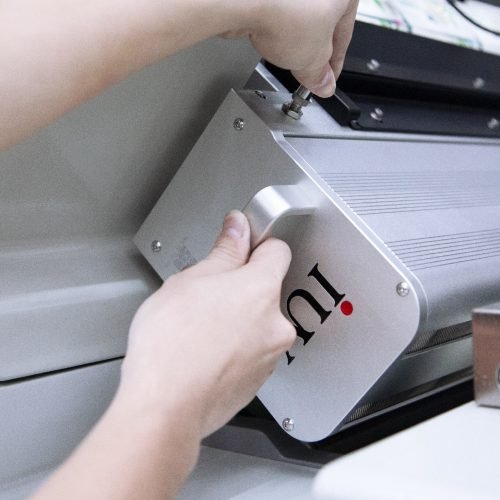
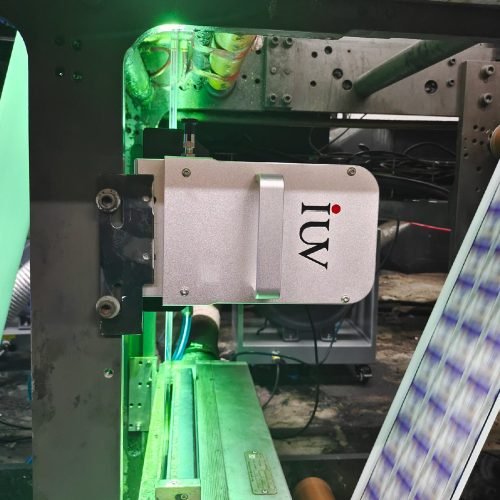
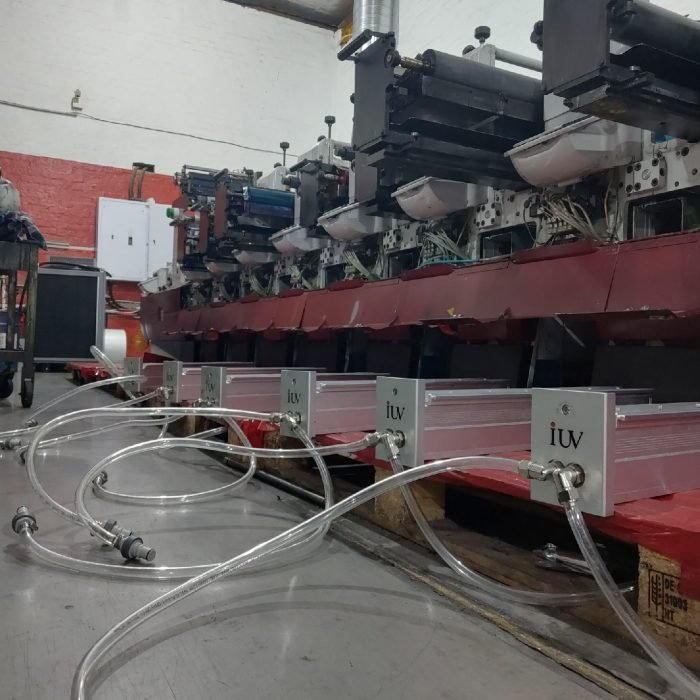
LED UV curing revolutionized label drying processes. Unlike mercury-vapor lamps requiring 15-30 minute warmup, instant-on LED systems achieve full cure intensity at 8-12 W/cm². This enables 30% faster line speeds for moisture-sensitive substrates like uncoated paper. The spectral matching between LED output and photoinitiators proves crucial – narrow-band 385nm LEDs paired with phenylglyoxylate initiators reduce residual monomers below 0.5% for direct food contact compliance.
Substrate selection directly impacts print technology choices. BOPP films require corona treatment reaching 38-42 dynes/cm for proper ink adhesion, while wash-off labels for reusable glass jars need water-soluble adhesives that survive steam sterilization. A emerging solution uses laser-engraved anilox rolls (20-25 μm cell depth) with high-viscosity UV inks to print on textured recycled papers without fillers showing through.
Regulatory compliance drives material innovation. FDA 21 CFR 175.300-compliant inks now incorporate hybrid resin systems (60% epoxy acrylate 40% polyester acrylate) that withstand pasteurization at 85°C for 30 minutes. Migration testing protocols have tightened – recent EU 10/2011 updates require testing at 40°C for 10 days rather than previous 20°C standard, pushing ink manufacturers to develop more stable pigment dispersions.
The true cost calculation must factor in waste reduction. LED UV systems lower energy costs by 70% compared to conventional drying, but the bigger saving comes from reduced make-ready waste. Presses with automated register control and spectral density measurement can achieve color match in 30-50 meters rather than 150-200 meters of substrate. For a typical 50,000-label run, this difference alone saves $180-240 in material costs.
Pressroom environment control often gets overlooked. Maintaining 22-24°C temperature and 50-55% RH prevents static buildup on PET films and ensures consistent ink viscosity. A recent case study showed that implementing HVAC zoning in a 24,000 sq ft label facility reduced substrate shrinkage issues by 83% during winter months.
The future lies in intelligent label systems. Conductive silver inks printed via rotary screen units enable NFC functionality for product authentication. A breakthrough in edible QR codes uses rice paper substrates with food-grade inks, printed at 1200 dpi on modified flexo presses. These innovations require close collaboration between printer engineers and brand R