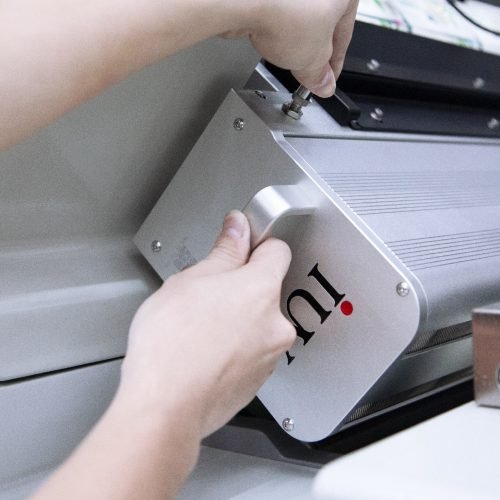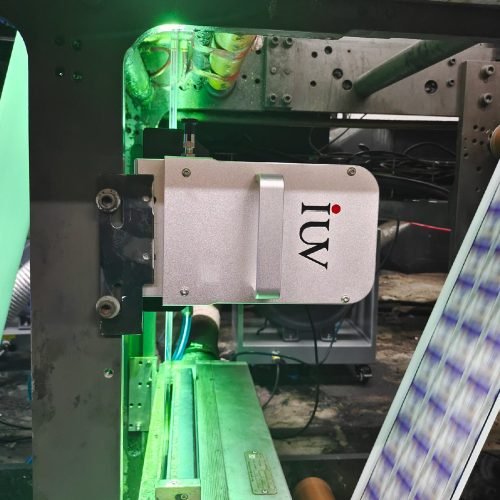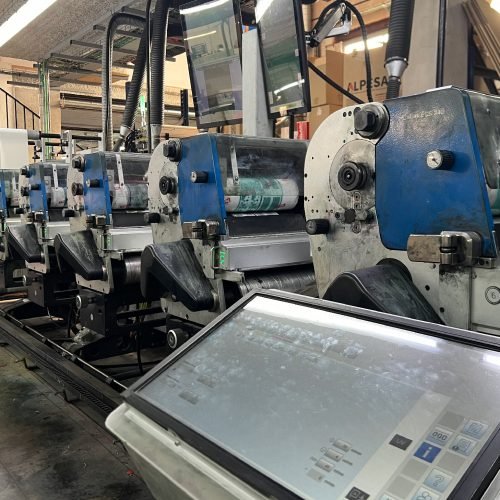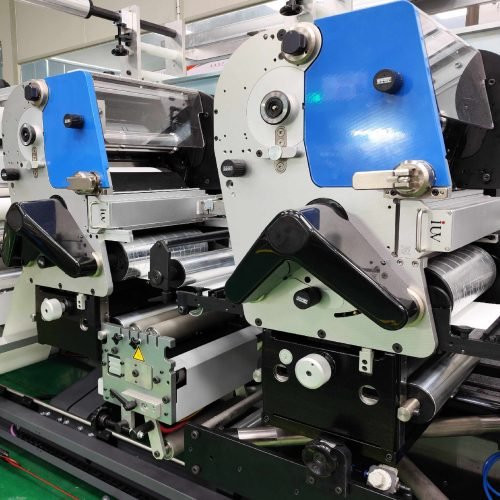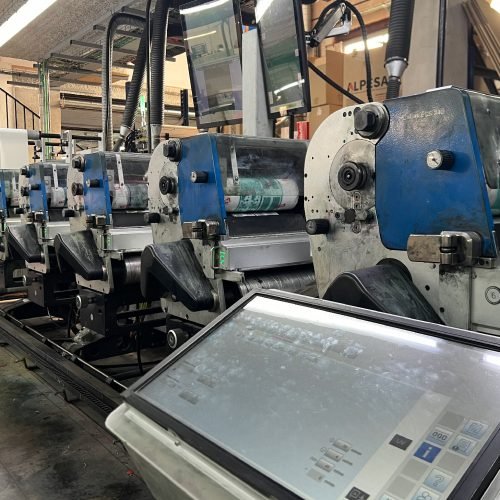
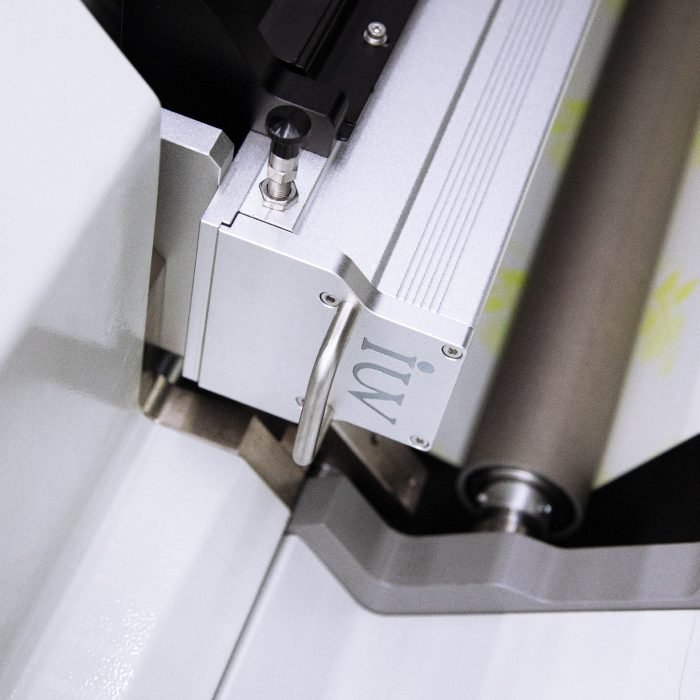
In the high-speed world of commercial printing, thermal management separates precision from chaos. LED UV offset units revolutionized curing speeds, but their true potential emerges only when paired with intelligent cooling architectures. Let’s examine how modern temperature control systems reshape label production, flexographic workflows, and narrow-web applications without the textbook jargon.
Print operators know the dance between ink viscosity and heat accumulation. Traditional mercury-vapor lamps used to turn press compartments into saunas, warping substrates and blurring fine text. LED arrays solved part of that equation – until shops pushed run lengths beyond eight-hour shifts. That’s where multi-zone cooling enters, acting as a climate control system for micron-level ink deposits.
Label converters running PET films at 150m/min face a particular devil: static electricity from overheated curing chambers attracting dust particles to adhesive layers. Advanced units now integrate vortex tube coolers alongside LED modules, creating negative ion fields that neutralize static while maintaining 40°C chamber temps. The result? Cleaner kiss-cutting edges and reduced silicone contamination on release liners.
Sheetfed offset operators battling dot gain discovered something counterintuitive – chilling the blanket cylinder to 18°C improves ink transfer consistency with UV coatings. This thermal trick compensates for plate expansion during long runs, holding registration tolerances under 0.1mm. Water-cooled rollers achieve this without condensation risks, using food-grade glycol solutions in sealed loops. One Heidelberg MMO user reported 37% less washup time after retrofitting such a system.
Narrow-web flexo presses for shrink sleeves present a thermal puzzle: curing inks on PVC that’s heat-sensitive while preventing ink offset on subsequent stations. The solution emerged from aerospace – phase-change materials (PCMs) embedded in impression cylinders. These paraffin-based composites absorb excess heat during curing, releasing it gradually during downstream cold foil application. Esko’s Edge pilot line demonstrated 22% faster job turnover using this thermal buffering approach.
But what about energy costs? The latest hybrid cooling designs answer that. Variable-speed turbofans coupled with IR sensors now adjust airflow in real-time across curing zones. During a label job with sparse coverage, only 30% fan capacity might engage. Spot a dense holographic overprint? The system ramps to 100% before heat accumulates. Bobst’s M6 platform slashed power draws by 41% using this demand-based approach without sacrificing cure rates.
Material science breakthroughs further enable these thermal strategies. Graphene-coated heat sinks in LED housings dissipate 70% more wattage than aluminum equivalents. Ceramic-bearing blowers now withstand the abrasive dust common in corrugated printing, maintaining stable temps in post-cure corona treatment stations. Even something as simple as anisotropic thermal tapes improved heat transfer from UV modules to cooling plates by 18% in DuPont’s trials.
The real game-changer lies in predictive thermal modeling. Machine learning algorithms now process ink coverage data, substrate thermal mass, and ambient humidity to pre-adjust cooling parameters. One KBA Rapida operator found the system anticipating stock changes – when switching from 200gsm cardboard to 40µm polyester mid-job, it automatically reconfigured blower speeds and chilling setpoints. No more test sheets or manual overrides.
Yet implementation requires nuance. Overcooling UV inks before complete polymerization creates surface tension issues. A European converter learned this hard truth when chilled nitrogen jets caused ink shrinkage on metallic substrates. The fix? Pulsed cooling synchronized with the LED’s duty cycle, allowing full crosslinking before temperature drops. Now their gold foiling achieves 95% adhesion rates versus previous 78%.
Maintenance protocols adapt accordingly. Closed-loop chillers need quarterly pH checks on coolant to prevent electrolytic corrosion. Air-knife systems demand weekly nozzle inspections – a single clogged orifice can create thermal hotspots. Smart presses now incorporate self-diagnostics, like Xeikon’s airflow sensors that alert when filter resistance exceeds thresholds. Proactive care prevents catastrophic failures during crucial orders.
As substrates diversify from bamboo paper to OLED-embedded films, thermal management becomes the silent conductor orchestrating print quality. The next frontier? Quantum dot cooling systems that convert waste heat into auxiliary power. Early prototypes in Japan show 12% energy recapture during UV curing cycles. For now, mastering existing advanced cooling techniques keeps shops competitive in markets where a 0.5°C temp shift means rejected batches. The message rings clear: in precision printing, thermodynamics isn’t just engineering – it’s profit protection.