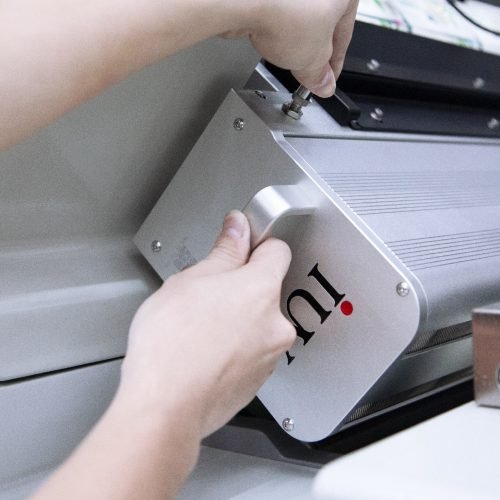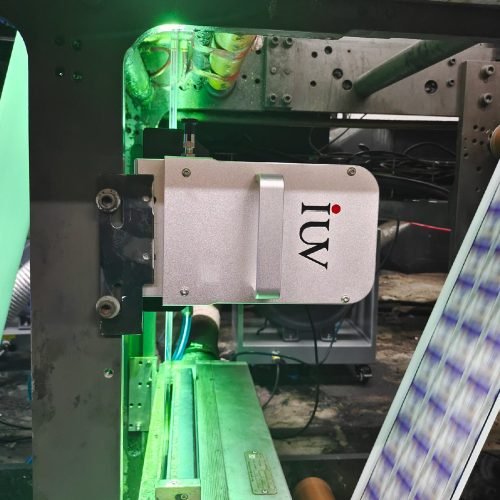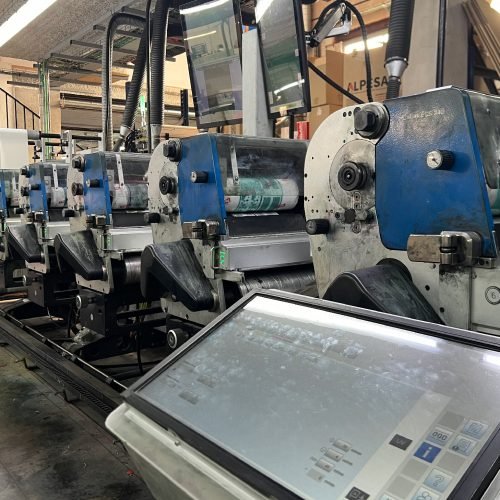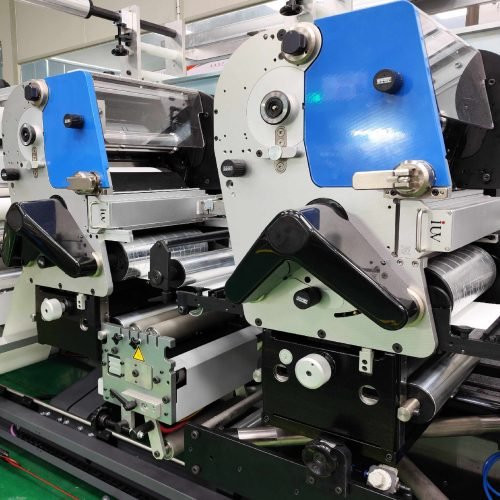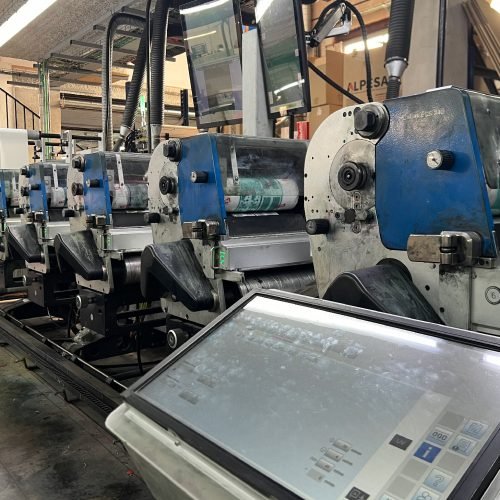
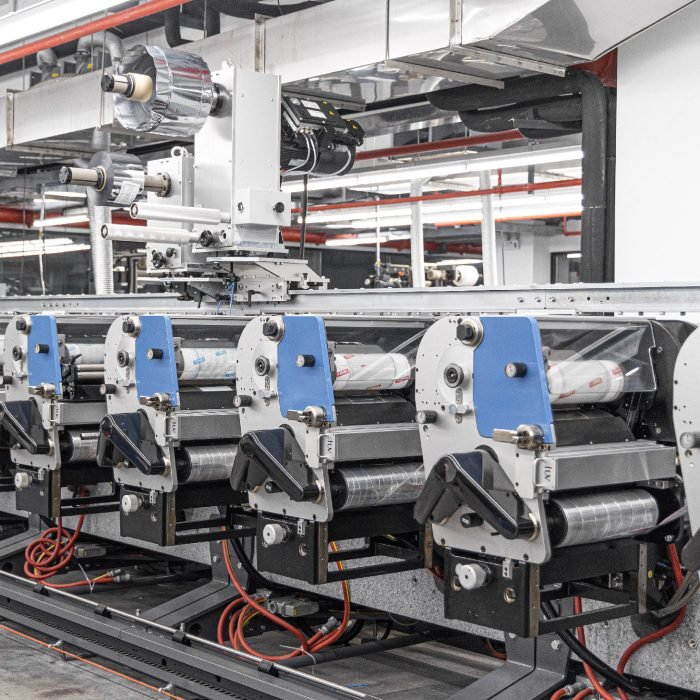
The hum of a flexo press accelerates as the UV lamps kick on, their blue glow transforming wet ink into durable graphics in milliseconds. This isn’t magic – it’s the precision dance of modern LED-UV curing technology rewriting the rules of label production. For press operators battling the twin demons of downtime and quality control, understanding this light-driven alchemy separates profitable runs from wasted substrate.
Traditional mercury vapor lamps once dominated curing processes, but their limitations created bottlenecks. Excessive heat warped thin films. Slow curing speeds forced reduced web rates. Ozone generation required elaborate ventilation systems. The shift to LED-UV solutions cracks these constraints open, delivering curing wavelengths that match photoinitiators in modern flexo inks with surgical precision.
Three critical factors determine UV curing efficiency in narrow web applications: spectral alignment, irradiance levels, and thermal management. Modern LED arrays emit at 365-395nm, the sweet spot for initiating ink polymerization without wasting energy on irrelevant wavelengths. Unlike conventional systems that lose intensity over time, LED units maintain consistent irradiance (measured in watts/cm²) across their 20,000 hour lifespan. This stability proves vital when running extended jobs on pressure-sensitive materials where even minor curing fluctuations cause adhesion failures.
Thermal control separates adequate systems from exceptional ones. Advanced water-cooled LED modules keep substrate temperature increases below 3°C, crucial when printing on heat-sensitive PE films or shrink sleeves. This thermal stability enables press speeds unthinkable with older technologies – some converters report pushing 250m/min on wine label stock without ink slippage or web distortion.
The chemistry beneath the surface matters as much as the hardware. UV-curable flexo inks contain oligomers that crosslink when exposed to specific light spectra. Formulations optimized for LED curing achieve full polymerization with 60% less energy input compared to conventional UV systems. This allows thinner ink films (down to 1.2μm) without sacrificing opacity – a game-changer for premium cosmetic labels demanding both vibrancy and tactile subtlety.
Press configuration strategies amplify these benefits. Many converters now position multiple LED units along the print path: pre-curing stations after each ink station prevent dot gain, while final curing modules ensure through-film polymerization. This distributed curing approach maintains color integrity across process jobs, particularly when printing tight registration graphics on polypropylene substrates.
Maintenance routines adapt to the new technology. LED arrays require no bulb replacements or reflector cleaning, but demand strict attention to cooling system maintenance. Monthly inspections of water circulation systems and thermal sensors prevent unexpected downtime. The payoff comes in reduced service costs – where mercury systems needed quarterly lamp changes, LED units operate for years with minimal intervention.
Substrate compatibility expands with advanced curing controls. Adjustable irradiance settings allow fine-tuning for delicate materials: 80% power for thin PET liners, full intensity for coated paperboard. Some presses integrate real-time monitoring, using UV sensors to automatically adjust lamp output as web speed fluctuates. This dynamic control prevents under-curing during acceleration phases and energy waste during steady-state operation.
The impact on print quality manifests in measurable ways. LED-UV cured inks achieve 95% cure completeness versus 70-85% with conventional systems. This shows in scratch resistance tests – crosshatch adhesion tests consistently rate LED-cured samples 20% higher. For pharmaceutical labels undergoing autoclave sterilization, this difference determines whether inks remain legible after steam exposure.
Energy consumption metrics reveal another layer of advantage. LED systems draw 40-60% less power than mercury-based units while eliminating the need for exhaust systems to remove ozone. Converters report annual energy savings exceeding $25,000 per press – a figure that climbs as utility rates increase. The environmental story resonates with brands seeking sustainable packaging options without premium pricing.
Workflow integration tips from early adopters prove valuable. Successful implementations often involve:
- Retrofit kits adapting existing flexo presses with modular LED units
- Collaboration with ink suppliers to optimize formulations for specific wavelengths
- Staff training on UV safety protocols (though LED systems eliminate UV-C exposure risks)
- Predictive maintenance schedules using built-in system diagnostics
The future points toward smarter curing integration. Emerging systems link LED arrays with press controls, automatically adjusting curing parameters when switching between label stocks. Experimental setups use UV transmission sensors to measure cure depth in real-time, creating closed-loop control systems that compensate for ink batch variations.
For converters hesitating at the capital investment threshold, the math becomes compelling. A typical LED-UV retrofit pays for itself in 14-18 months through reduced energy costs, faster job turnover, and eliminated bulb replacement expenses. When combined with the ability to pursue premium clients demanding flawless metallized finishes or tamper-evident security inks, the ROI extends beyond simple arithmetic.
The quiet revolution in UV curing reshapes competitive landscapes. Operations that once struggled with 8-color process jobs on shrink films now handle them at web speeds previously reserved for simple line work. As brand managers demand shorter runs with complex effects, the shops equipped with advanced LED-UV capabilities claim these premium jobs – and the profit margins that follow.
Pressroom veterans note a cultural shift. The reliability of modern UV systems reduces firefighting and lets teams focus on color matching and substrate innovation. What began as a technical upgrade often evolves into strategic advantage, positioning forward-thinking converters as partners in packaging innovation rather than mere suppliers.
In this environment, mastering UV curing technology becomes more than an engineering challenge – it’s a passport to competing in high-value print markets. The shops that crack the code on speed, stability, and sustainability don’t just survive market shifts; they define them.