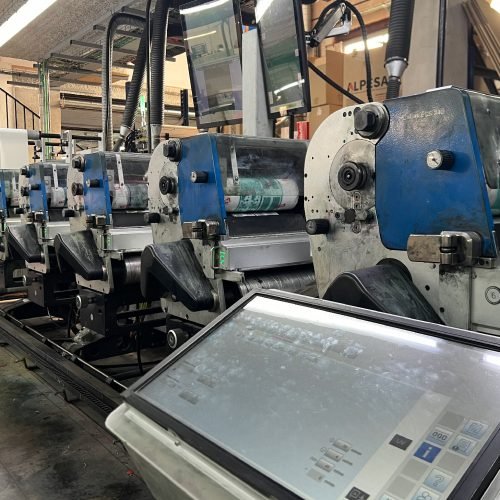
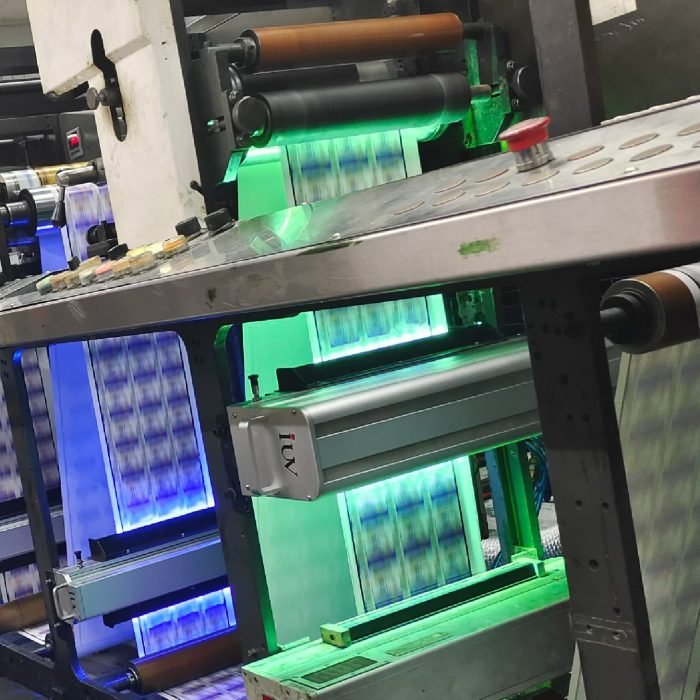
In the fast-paced world of packaging production, achieving consistent print quality remains both a technical challenge and a competitive necessity. LED curing systems have emerged as game-changers across label, flexographic, offset, and narrow web printing applications. Unlike traditional mercury-vapor UV lamps, these solid-state light sources deliver precise energy output that keeps colors vibrant from the first impression to the ten-thousandth copy.
The physics behind LED-UV curing explains its reliability. Narrow-spectrum wavelengths between 365-405nm interact predictably with photoinitiators in modern inks, triggering instantaneous polymerization. This controlled reaction eliminates the ink viscosity fluctuations that plague conventional drying methods. For label printers running short batches with frequent substrate changes, that consistency translates to fewer press stops and reduced waste.
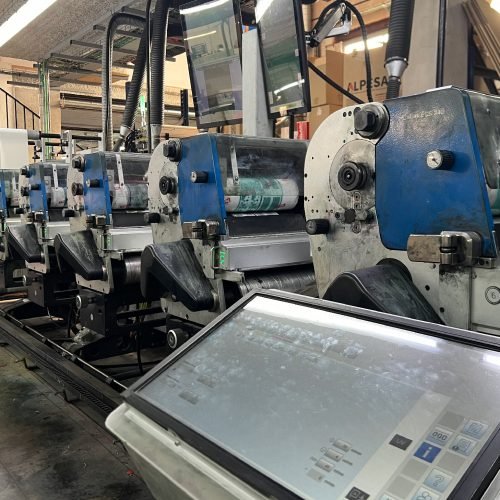
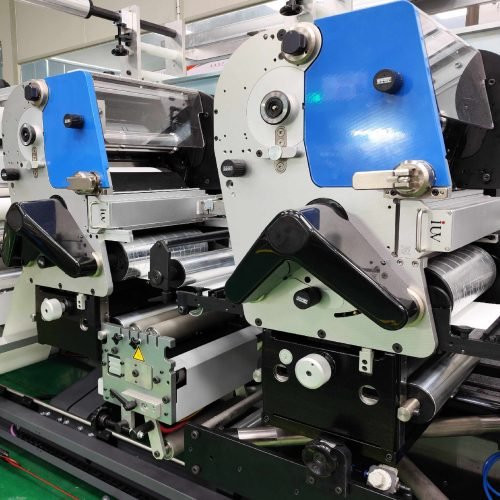
Flexographic operations benefit from LED systems’ instant on/off capability during job changeovers. The absence of warm-up cycles allows printers to maintain tighter registration across multicolor jobs. A major beverage label manufacturer reported 40% fewer registration-related rejects after switching to LED curing stations in their flexo lines. The directional nature of LED arrays also minimizes heat transfer to flexible films – a critical advantage when working with heat-sensitive substrates.
Offset printers adopting hybrid UV-LED workflows notice immediate improvements in dot reproduction. The rapid curing locks ink droplets in place before they can spread on coated stocks, preserving highlight details in premium packaging applications. One folding carton producer measured a 15% increase in process color gamut after retrofitting their sheetfed press with high-intensity LED modules.
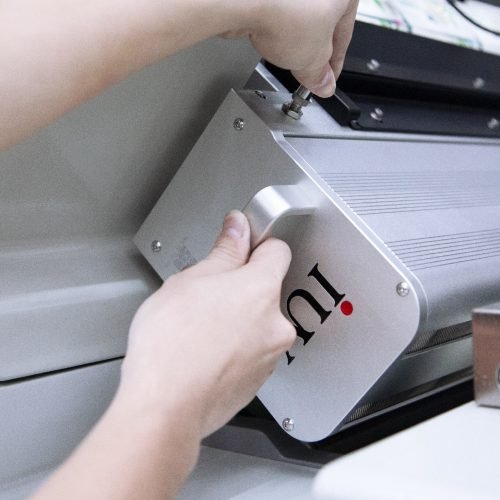
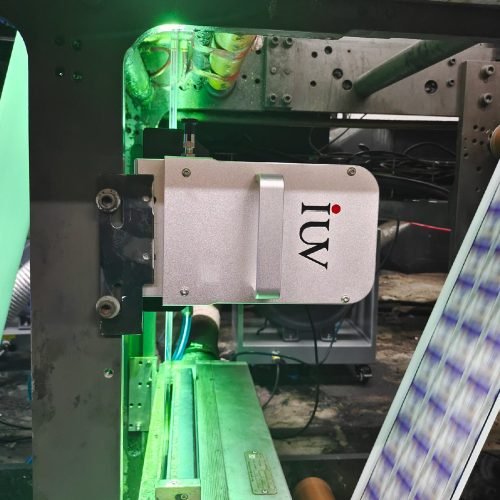
Narrow web converters face unique consistency challenges with variable web tensions and fast job turnover. LED systems address both through reduced energy consumption and modular design. Operators can position curing units closer to print stations without heat damage concerns, shortening the web path for better tension control. The latest water-cooled LED arrays maintain peak irradiance levels through 20,000 operating hours, ensuring uniform curing performance across three-shift production schedules.
Three operational factors determine LED curing effectiveness in packaging workflows:
- Spectral matching between LED peak wavelength and ink photoinitiators
- Irradiance levels maintaining optimal surface/through cure balance
- Heat dissipation designs preventing substrate distortion
Leading ink manufacturers now provide formulation roadmaps for specific LED configurations. A European ink developer recently introduced dual-cure chemistries compatible with both 395nm and 385nm systems, giving printers flexibility across equipment generations.
Maintenance protocols differ significantly from traditional UV systems. While LED arrays eliminate bulb replacements and electrode degradation, they require periodic lens cleaning and thermal paste renewal. Proactive shops implement monthly output verification using radiometers – a 10-minute check that prevents costly under-cure incidents.
The operational economics make a compelling case. LED systems consume 60-70% less energy than conventional UV setups while producing zero ozone. A mid-sized label converter calculated 11-month ROI after reducing their monthly power consumption by 8,400 kWh. Sustainability-focused brands increasingly specify LED-cured packaging, recognizing the technology’s role in reducing Scope 3 emissions.
As substrate diversity grows, so does LED curing’s advantage. Recent trials with biodegradable films showed superior adhesion compared to thermal-cured inks, as lower temperatures prevent polymer degradation. Metallized stocks present unique challenges – some printers achieve better results using pulsed LED modes that allow brief cooling intervals between high-intensity bursts.
The future points toward smarter integration. Next-gen LED systems incorporate real-time monitoring sensors that adjust output based on line speed and ink coverage. Imagine curing units that automatically compensate for substrate reflectivity changes or ambient temperature fluctuations. This level of process control could make print consistency issues as outdated as solvent-based inks.
For technical teams evaluating the transition, start with a process audit. Map current variability points in color density, registration accuracy, and post-print defects. Pilot the technology on a single press line using substrates representing 80% of your workload. Measure not just print quality metrics, but also secondary benefits like reduced make-ready time and lower HVAC costs. The data often reveals hidden advantages that accelerate adoption across entire operations.
Packaging buyers now expect both aesthetic perfection and production agility. LED curing delivers on both fronts, providing the stability required for premium branding while enabling faster turnaround times. As regulatory pressures mount on traditional curing methods, early adopters position themselves as technical leaders – ready to handle whatever substrates or sustainability mandates come next.