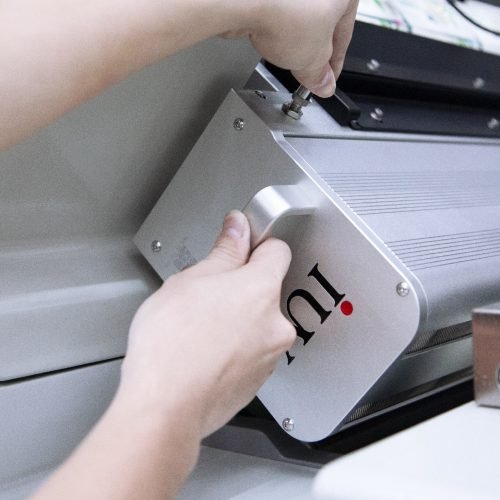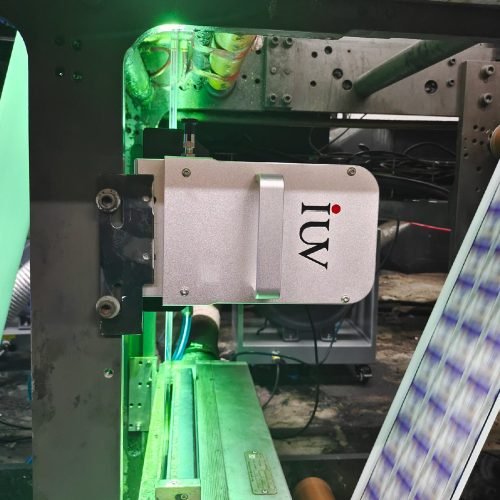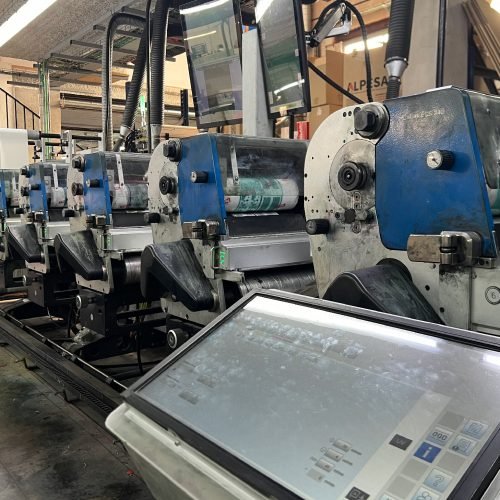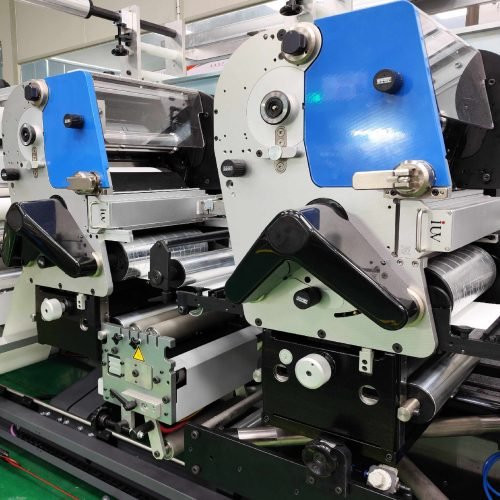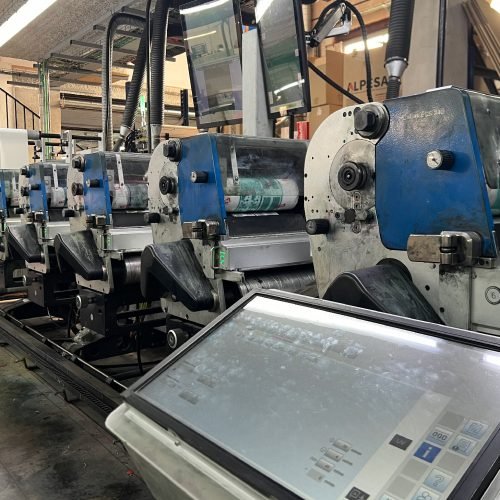
The commercial printing landscape thrives on speed, precision, and adaptability. As label production accelerates and packaging demands diversify, UV LED curing emerges as the silent workhorse transforming shop floors. Unlike traditional mercury-vapor lamps that waste energy heating entire pressrooms, these solid-state systems deliver targeted energy where it matters – at the substrate-polymer interface.
Label Printing’s New Precision Tool
Narrow-web label converters face a constant tug-of-war between vibrant metallic inks and delicate substrates. UV LED’s instant on/off capability eliminates thermal distortion in thin film materials during intermittent printing. The spectral control of modern 385-395nm LED arrays achieves full curing of white inks without yellowing – a perpetual headache in wine labels and cosmetic packaging. Milwaukee-based converters report 40% faster job turnover since switching, as LED-cured labels ship immediately without off-gassing delays.
Flexo’s Speed Revolution
Midwest packaging plants running 10-color CI flexo presses discovered an unexpected benefit: LED curing units reduced their makeready waste by 18%. The reason? Precise irradiance control allows running thinner anilox volumes without sacrificing opacity. One corrugated board producer slashed ink consumption 22% while maintaining ISO 12647 color compliance. The elimination of mercury lamp warm-up cycles now enables true just-in-time production – presses start curing within milliseconds, not minutes.
Offset’s Chemical Makeover
Sheetfed operators traditionally viewed UV as a niche solution for plastic cards and specialty coatings. LED technology flips the script. Heidelberg’s latest Speedmaster configurations demonstrate 30-micron dot gain consistency across 10,000 sheets – a feat impossible with thermal curing’s variable energy output. The real game-changer lies in chemistry: LED-specific inks now match conventional offset pricing while eliminating VOC emissions. A Toronto printer serving pharmaceutical clients reduced pressroom air changes from 15 to 2 per hour, dramatically cutting HVAC costs.
Narrow-Web’s Energy Rebirth
Digital hybrid presses blending inkjet and flexo stations benefit most from LED’s compact form factor. A European converter running 20-inch web widths achieved 95% energy savings by replacing 12 mercury lamps with 48 LED arrays drawing 15W each. The modular design allows curing complex security features – holographic overprints, tactile varnishes – without retrofitting entire press lines.
Curing Science Simplified
Peak irradiance (W/cm²) and spectral matching dictate cure efficiency more than total energy (J/cm²). LED systems hitting 12-15 W/cm² at 385nm penetrate pigmented inks better than broad-spectrum arc lamps. Advanced units now incorporate real-time radiometry, automatically adjusting output as web speeds fluctuate. This dynamic control prevents under-cure during acceleration and over-exposure at steady state.
The ROI Breakdown
Energy metrics only tell half the story. A Massachusetts label plant’s cost analysis revealed:
- 84% reduction in curing energy costs
- $18,000 annual savings in HVAC filtration
- 11% longer plate life from reduced heat
- 63% fewer substrate rejects from thermal warping
But the true value emerges in hidden efficiencies. LED’s cold curing enables printing on heat-sensitive materials like shrink sleeves and IML labels – markets growing 12% annually. Press operators report 27% fewer changeover delays since eliminating lamp cooling periods.
Maintenance shifts from reactive to predictive. With 20,000-hour lifespans, LED arrays require no bulb replacements – just annual lens cleaning. A Midwest converter eliminated three monthly service calls related to lamp ignition failures, saving $4,200 annually in emergency maintenance.
As regulatory pressures mount, UV LED future-proofs operations. California’s Rule 1113 already restricts mercury emissions, while EU RoHS directives phase out arc lamps entirely by 2025. Early adopters gain marketing leverage – 68% of packaging buyers prioritize sustainable suppliers.
The transition requires nuance. Not all LED systems match existing press configurations. Retrofitting older flexo presses demands spectral analysis of current inks – some formulations require photoinitiator adjustments. But with ink chemists now offering universal LED-compatible series, the barriers keep falling.
Commercial printers face a clear trajectory. Those clinging to mercury curing risk becoming cost-uncompetitive within two fiscal cycles. The shops thriving today aren’t just buying new equipment – they’re reengineering workflows around LED’s unique capabilities. From instant job switching to exotic material handling, this technology isn’t merely improving margins. It’s redefining what’s printable.