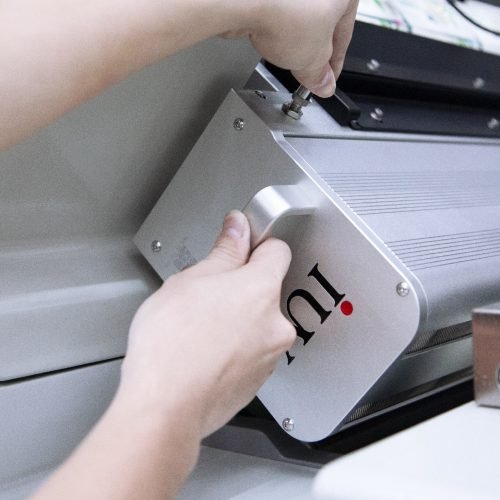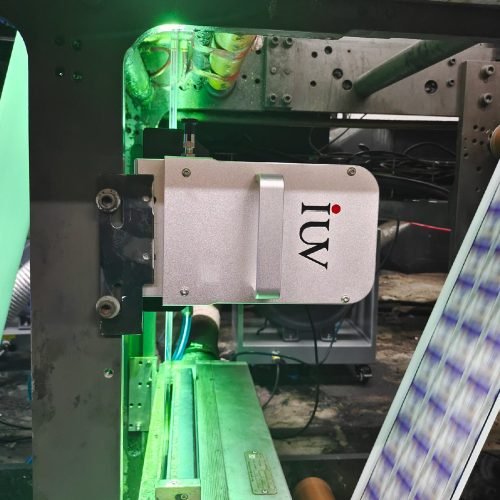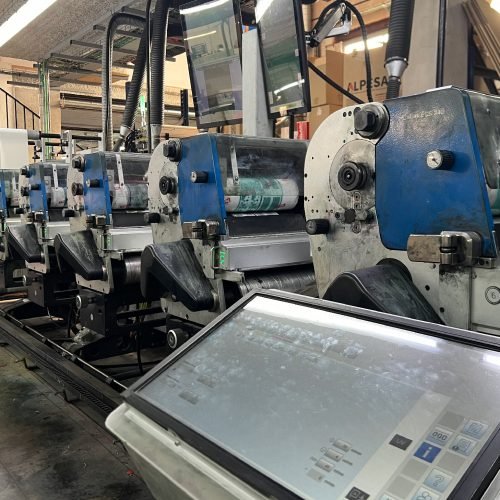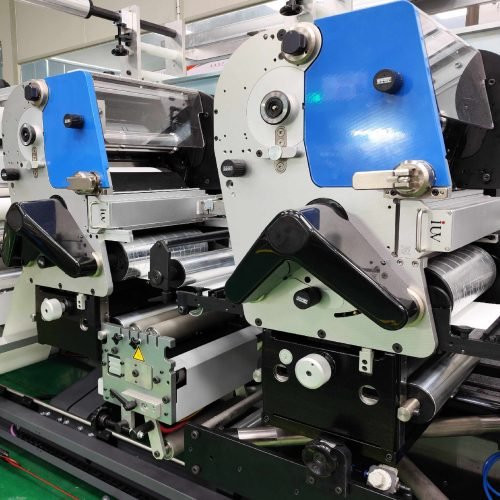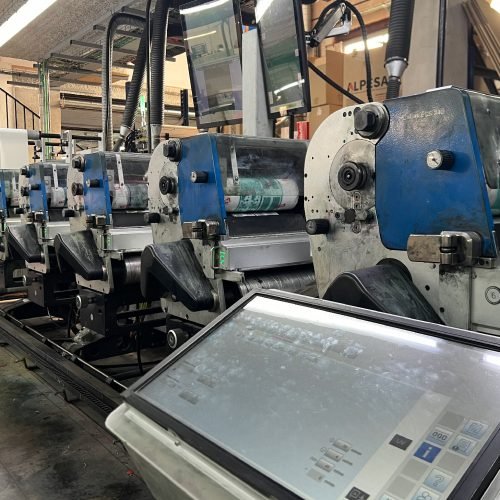
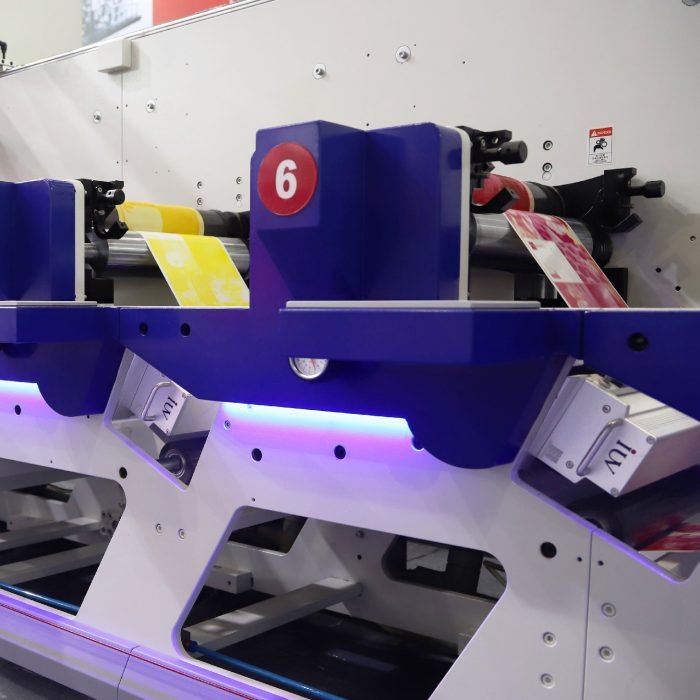
Achieving flawless ink adhesion in printing relies heavily on mastering UV curing dynamics. Let’s cut through the jargon and explore actionable strategies for label, flexo, offset, and narrow-web applications using modern LED UV systems.
The Chemistry of Stick
Ink adhesion isn’t magic—it’s molecular. UV-curable inks polymerize when exposed to specific wavelengths, creating chains that bond with substrates. The catch? Substrate surface energy must exceed ink surface tension by at least 10 dynes/cm. For polyethylene labels, that means pre-treatment to 38-42 dynes/cm before printing. Corona treatment works, but overdoing it creates brittle surfaces—monitor with dyne pens weekly.
LED vs. Mercury Vapor: The Game Changer
Traditional mercury lamps waste 75% energy as heat. LED UV systems deliver 385-405nm wavelengths with surgical precision, slashing energy costs by 60% while eliminating ozone. For narrow-web presses running heat-sensitive films, this means zero substrate warping at 120m/min. Pro tip: Match photoinitiators to your LED’s peak wavelength—benzophenone derivatives work best under 395nm arrays.
Press-Specific Optimization
Label Printing
White inks demand 2.5W/cm² intensity for full opacity on BOPP. Stagger dual-LED arrays at 45° angles to eliminate shadowing on embossed labels.
Flexo Presses
Anilox volume matters. For UV flexo inks, use 4-6 bcm cells. Too much ink = uncured residuals; too little = adhesion failure. Pair with 1200W/inch LED modules for 0.3-second cure times on paperboard.
Offset Applications
UV offset inks need 20-25°C roller temps. Colder? Viscosity spikes cause hickeys. Hotter? Premature curing jams blankets. Install IR thermometers on ink ducts—real-time monitoring prevents 73% of adhesion-related press stops.
Narrow-Web Challenges
When printing on metallized PET at 150m/min, ramp up LED intensity gradually. Sudden energy spikes delaminate foil layers. Start at 1.8W/cm², increase 0.2W/cm² every 50 meters until reaching 2.4W/cm².
The Humidity Wildcard
UV inks hate airborne moisture. Above 60% RH, water molecules compete with acrylate groups for substrate bonding. Solution: Install desiccant dryers in ink zones, maintaining 45-50% RH. Sawtooth humidity patterns? Use real-time adhesion testers—peel strength shouldn’t drop below 2.5N/15mm.
Curing Zone Geometry
Reflector angles impact cure efficiency more than most realize. For cylindrical containers, elliptical reflectors focusing 85% energy within 12mm2 prevent under-cured seams. Flat substrates? Parabolic reflectors boost coverage by 40%.
Troubleshooting Table
| Issue | Likely Culprit | Fix |
|---|---|---|
| Ink rub-off | Oxygen inhibition | Add 1-2% amine synergist |
| Edge lifting | Substrate static | Install ionizing blower |
| Patchy cure | Lamp degradation | Replace LED arrays at 8,000hrs |
| Fish eyes | Contaminated stock | Wipe with IPA:water (70:30) |
Post-Cure Considerations
Some cationic UV inks continue curing for 24hrs. For medical packaging requiring immediate adhesion testing, use hybrid free radical/cationic systems. They reach 90% bond strength in 15 seconds.
The Cost-Speed Paradox
Faster curing reduces production time but increases energy use. The sweet spot? For most label printers, 100m/min at 2.1W/cm² balances throughput and kWh costs. Run a cost-per-meter analysis—if curing consumes over 18% of job expenses, recalibrate your UV dosage.
Material-Specific Protocols
- PVC Labels: Add 3% adhesion promoter before curing
- Synthetic Papers: Oxidize surface with flame treatment post-printing
- Glass Bottles: Use UV inks with silane coupling agents
The Future: Variable UV Dosing
Smart curing systems now adjust intensity based on substrate thickness detected by laser sensors. Printing 200micron chipboard followed by 80micron film? The system auto-adjusts from 3.0 to 1.8W/cm² without operator input—reducing energy waste by 35%.
Maintenance Non-Negotiables
- Clean LED lenses every 120 operating hours (use microfiber ethanol)
- Recalibrate radiometers quarterly
- Replace UV filters biannually
- Test adhesion weekly with cross-hatch kits
Misaligned UV systems can hemorrhage profits. A 2mm focal shift reduces curing efficiency by 18%—enough to turn premium packaging jobs into scrap piles. Implement laser alignment checks during shift changes.
For shops running mixed substrates, keep two UV formulations handy: a flexible type for films (55-60 Shore A) and a rigid version for paperboard (70-75 Shore A). Swapping mid-run? Purge lines thoroughly—even 5% residual wrong ink chemistry tanks adhesion.
The difference between good and perfect results often lies in spectral distribution. Request your UV ink supplier’s emission spectrum chart. If their initiators peak at 365nm but your LEDs hit hardest at 395nm, you’re lighting a match in a rainstorm.
Last point: Document everything. Curing parameters, substrate batches, ambient conditions. When adhesion issues arise (they will), your data log will reveal patterns invisible in the moment. One shop traced 90% of adhesion faults to a single paper supplier’s sizing agent—solved by switching to a different starch blend.
Precision UV curing isn’t about brute force—it’s about calculated energy deployment. Master these variables, and substrates won’t just hold ink. They’ll cling to it like a lifeline.