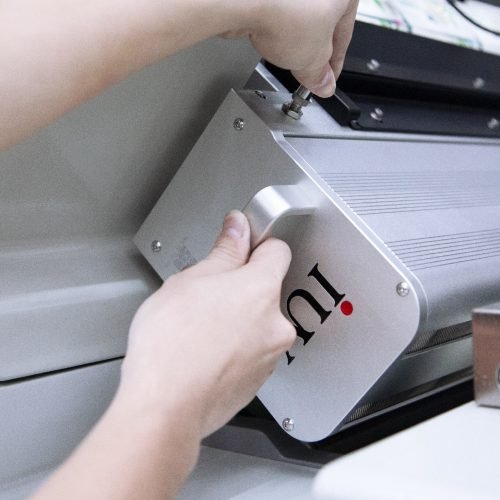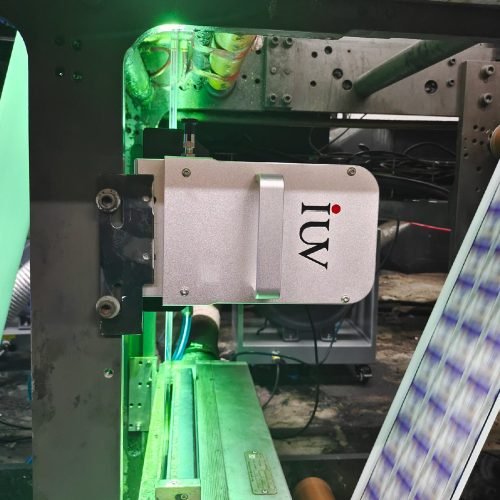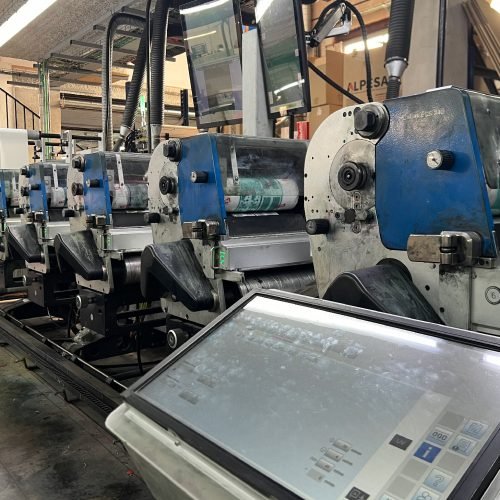
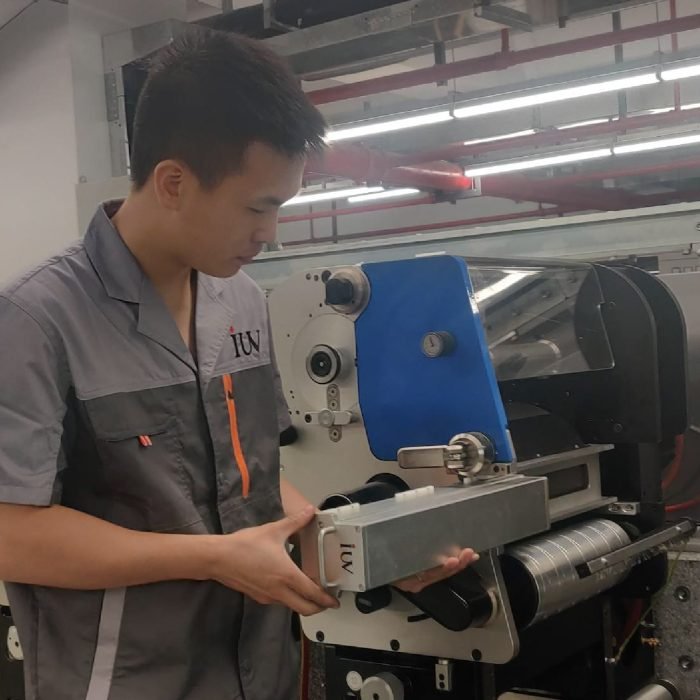
A UV LED curing system is a technology used in printing to instantly dry inks, coatings, or adhesives using ultraviolet light emitted by light-emitting diodes (LEDs). Unlike traditional mercury-vapor lamps, these systems generate specific wavelengths (typically 365-405 nm) to trigger photochemical reactions in UV-sensitive materials. The process eliminates solvent evaporation, converting liquid formulations into solid polymers within seconds through controlled light exposure.
In printing applications, the system integrates with presses using three primary configurations:
- Roll-to-roll units for flexible substrates
- Flatbed arrays for sheet-fed operations
- Hybrid setups combining both
Operators adjust irradiance (measured in W/cm²) and spectral output to match material requirements. Key components include LED arrays, heat sinks for thermal management, and reflectors to direct light efficiently.
Label Printing Adaptations
Narrow-web label presses benefit from UV LED’s pinpoint curing capabilities, particularly for:
- Temperature-sensitive synthetic materials (PET, polypropylene)
- Thin films prone to warping
- Metallic or holographic substrates
The technology enables faster production speeds (up to 200 m/min) compared to conventional drying, critical for short-run customized labels. Overcuring risks—a common issue with mercury lamps—are minimized due to adjustable intensity settings.
Flexographic Printing Integration
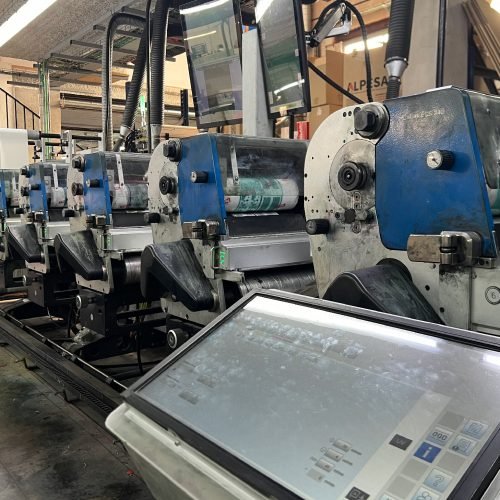
Flexo printers using UV LED report 30-50% energy savings and reduced make-ready waste. Water-based inks still dominate the market, but UV-curable formulations gain traction for:
- High-opacity white inks
- Specialty coatings (soft-touch, textured)
- Food-safe packaging requiring rapid curing
Anilox roll volume adjustments become critical—excessive ink deposition leads to incomplete curing, while insufficient ink causes pinholing. Optimal results occur at 60-80% coverage with 300-600 LPI rolls.
Offset Lithography Applications
Sheetfed offset printers adopt UV LED for:
- Thick UV coatings (20-30 microns) on packaging
- Dense ink layers (e.g., 4-color process spot white)
- Non-porous substrates (plastic cards, synthetic papers)
Chillers are often unnecessary since LED systems emit 70% less heat than arc lamps. This prevents paper deformation and allows immediate post-curing processes like die-cutting.
Narrow Web Considerations
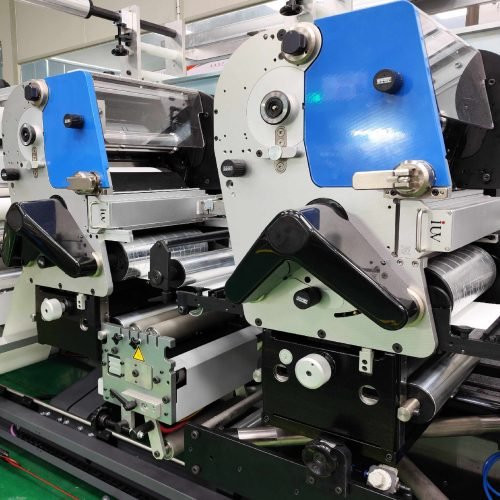
In multi-process narrow web lines, UV LED arrays are positioned after:
- Screen printing units (for tactile effects)
- Hot foil stamping (to cure adhesive primers)
- Lamination stations (for instant bond setting)
Dual-wavelength systems (385 395 nm) address curing challenges with pigmented inks. Oxygen inhibition—a phenomenon where surface cure is hindered by air exposure—is mitigated using nitrogen inerting or amine-modified oligomers.
Performance Metrics
- Cure Speed: Determined by irradiance × exposure time (mJ/cm²). Typical requirements:
- Clear coatings: 300-500 mJ/cm²
- Black inks: 800-1200 mJ/cm²
- Peak Intensity: Higher wattage (10W/cm² ) enables thicker coatings
- Spectral Match: Photoinitiators in materials must absorb emitted wavelengths
Maintenance Practices
- Quarterly lens cleaning with IPA to prevent output loss
- Annual thermal paste reapplication on LED modules
- Real-time monitoring via built-in radiometers
Retrofitting existing presses requires evaluating:
- Power supply compatibility (48V DC typical)
- Cooling requirements (ambient vs forced air)
- Conveyor synchronization for consistent exposure
Substrate pre-treatment (corona, plasma) enhances surface energy for better ink adhesion pre-curing. Post-cure properties like scratch resistance and chemical tolerance depend on oligomer selection—epoxy acrylates for hardness, polyester types for flexibility.
As regulatory pressures phase out mercury lamps, UV LED becomes the de facto curing method for printers balancing productivity with sustainability goals. The absence of ozone emissions and mercury disposal costs aligns with circular economy initiatives while maintaining print quality across applications.