Sure, I can help you with that! Here’s an SEO-optimized article about the science behind LED UV curing in flexo printing, written from the perspective of a seasoned printing industry equipment and process engineer, and a senior Google SEO copywriter.
The Brilliance of LED UV Curing in Flexo Printing: A Deeper Dive
Flexographic printing, often called flexo printing, is a versatile method widely used for printing on various packaging materials. In recent years, a significant technological advancement has revolutionized this field: LED UV curing. This isn’t just a trend; it’s a fundamental shift driven by a deep understanding of the science behind light-activated chemical reactions. For narrow web printers, especially those focused on label printing, mastering this technology offers unparalleled benefits in speed, quality, and sustainability.
Traditional UV curing systems often relied on mercury vapor lamps. These lamps emit a broad spectrum of light, including infrared radiation (heat) and UV light. While effective, they come with considerable drawbacks. The heat generated can stress heat-sensitive substrates, leading to distortions or delamination. Mercury lamps also have a shorter lifespan, require warm-up and cool-down periods, and contain hazardous materials, posing disposal challenges.
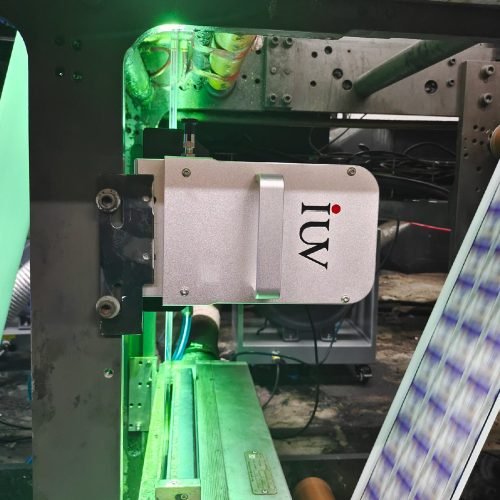
Enter LED UV curing. This technology harnesses the power of Light Emitting Diodes, semiconductor devices that emit light when an electric current passes through them. The key difference lies in the targeted nature of the light emitted. LED UV systems are designed to emit UV light at specific wavelengths, precisely matching the absorption spectrum of UV-curable inks, coatings, and adhesives. This targeted approach is where the science truly shines.
UV-curable inks are formulated with photoinitiators. These are special molecules that, when exposed to UV light of a specific wavelength, absorb the energy and initiate a photochemical reaction. This reaction, known as polymerization or cross-linking, causes the liquid ink to rapidly transform into a solid, durable film. The efficiency of this process hinges on the precise match between the LED’s emitted wavelength and the photoinitiator’s absorption peak.
Consider the chemistry. Most UV-curable inks utilize acrylate or methacrylate monomers and oligomers. These are molecules with reactive double bonds. When the photoinitiator, energized by the LED UV light, generates free radicals or cations, these radicals/cations attack the double bonds of the monomers and oligomers. This initiates a chain reaction, where monomers and oligomers link together, forming long, complex polymer chains. This rapid cross-linking process is what solidifies the ink almost instantaneously.
The narrow bandwidth of LED UV light is a critical advantage. Unlike broad-spectrum mercury lamps, LEDs emit light within a tightly controlled range, typically in the UVA range (315-400 nm), often centered around 365 nm, 385 nm, 395 nm, or 405 nm. This precise emission spectrum means that almost all the emitted energy is utilized for curing, minimizing wasted energy and heat. This is particularly beneficial in label printing where intricate details and thin substrates are common. Offset printing, or offset lithography, while a different printing process, also sees benefits when adapted to UV curing, but flexo’s inherent speed and material versatility make LED UV an exceptional partner for narrow web applications.
The science of wavelength matching extends to different ink formulations. Different photoinitiators have different absorption characteristics. Manufacturers of UV-curable inks and coatings carefully select photoinitiators that are highly responsive to specific LED wavelengths. This allows for tailored curing solutions for a wide array of applications, from high-gloss finishes on product labels to durable coatings on flexible packaging. For instance, an ink designed for deep cure might use photoinitiators that absorb at a slightly longer wavelength, which can penetrate deeper into the ink layer.
The benefits for narrow web printers are substantial. First, the energy efficiency is remarkable. LEDs consume significantly less power compared to mercury lamps, leading to reduced electricity costs. Their instant on/off capability means no warm-up or cool-down time, increasing press uptime and allowing for immediate job changes. This is a game-changer for short-run label printing where efficiency is paramount.
Second, the quality of print is enhanced. The precise control over the curing process results in sharper dots, finer text, and a more consistent ink laydown. The lack of excessive heat prevents substrate distortion, ensuring dimensional stability, which is crucial for accurate registration in multi-color printing. This level of precision is invaluable for high-end label printing and other applications demanding pristine visual appeal.
Third, environmental considerations are met. LEDs are mercury-free, making them a more environmentally friendly choice. Their longer lifespan means fewer replacements and less waste. Furthermore, the energy efficiency contributes to a smaller carbon footprint. Many UV-curable inks themselves are also low in VOCs (Volatile Organic Compounds), further enhancing the sustainability of the process, a growing concern for brands and consumers alike.
The thermal management of LED UV systems is also a feat of engineering. While LEDs produce less heat than mercury lamps, they still generate some. Advanced cooling systems, often involving heat sinks and fans or even liquid cooling, are integrated to maintain optimal LED operating temperatures. This ensures consistent light output and extends the lifespan of the LEDs. The science behind effective heat dissipation is as critical as the light emission itself for reliable performance.
For printers looking to invest in new equipment or upgrade existing presses, understanding the nuances of LED UV curing is vital. It’s not just about buying a new lamp; it’s about understanding the interaction between light source, photoinitiators, and substrates. This knowledge empowers informed decisions about ink selection, press configuration, and overall process optimization. The future of flexographic printing, particularly in the competitive narrow web and label printing markets, is undeniably linked to the continued evolution and intelligent application of LED UV curing technology. It represents a powerful fusion of chemistry, physics, and engineering, delivering superior results with greater efficiency and a reduced environmental impact.